391 tested activities. Filter by group size, time available, and budget — your
filtered view lives in the URL, so copy the address bar to share a shortlist with your team.
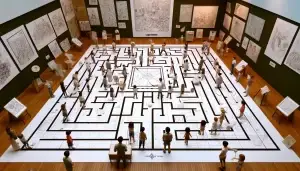
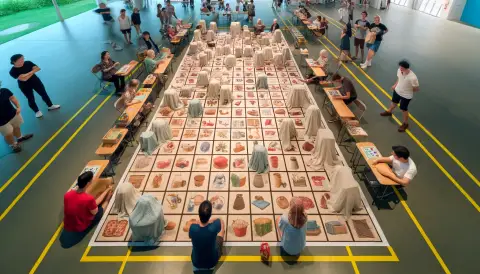
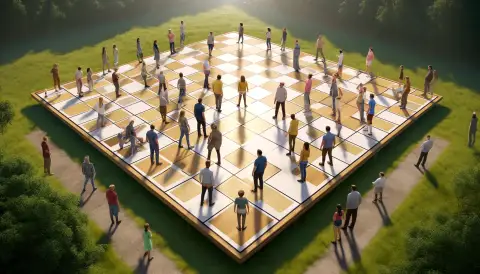
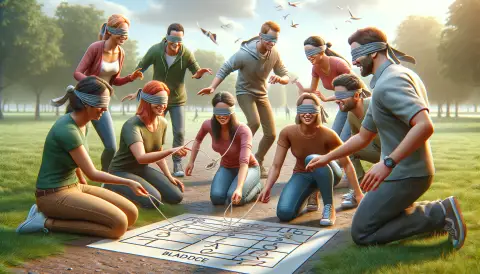
Lay out paper on the floor in a grid. On a separate piece of paper, draw a path through this grid that only the game host can see. Teams take turns trying to go through the grid and guessing the correct path. If they step on a square that is not on the path held by the game host, they must start again. First team through wins.
Make teams. Host of the game says a word. Teams must write down as many songs as possible that have that word in it within the time limit. Once time is up, alternate between teams as they sing songs from their list. Same song cannot be sung twice. Last team standing wins.
Players get an amount of time to tie a knot. Switch with another player and first to untie the knot wins. Should probably use a thicker rope so that it is actually possible to untie.
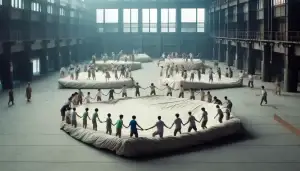
Have teams each stand on their own blanket. Teams must work together to flip over the blanket without having any team member touch the floor. If they touch the floor, the team must start again.
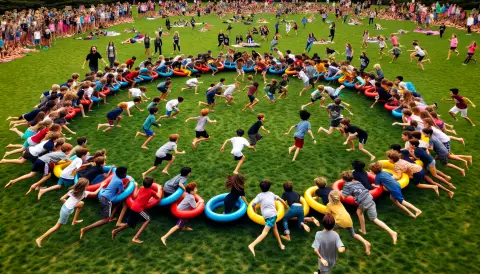
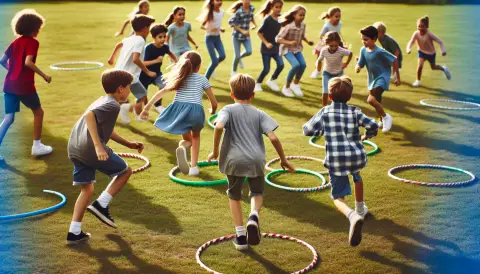
Lay a line of hula hoops across the ground connecting two teams' home bases. One player from each team starts hopping on one foot, hoop to hoop, toward the other side. Where the two meet face to face, they play rock-paper-scissors: the winner keeps advancing, and the loser peels off while the next teammate immediately launches to intercept. If a player makes it all the way to the opposing team's end, their team scores (or wins). Fast, loud, and endlessly restartable.
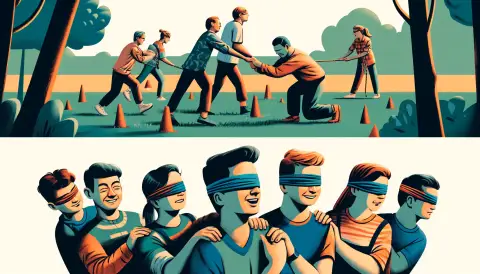
Broken Telephone with Headphones is a game where the players with music in their headphones stand in a line facing the back of the player in front of them. The first player in the line has no music and receives a phrase which he has to say to the player in front of him and the player in front of him passes it on to the next player and so on. The last player has to say the phrase that came to him out loud.
Players stand in a line, everyone facing the back of the person ahead of them. The last player in line is given the name of a movie and taps the shoulder of the player in front, who turns around to watch them mime it — no words, no sounds. That player then taps the next shoulder and passes on the mime as they understood it, and so on down the line. The player at the front announces what movie they think they just watched, and the group compares it with the original. The further the title drifts, the better the game.
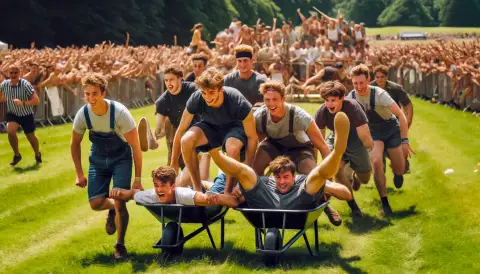
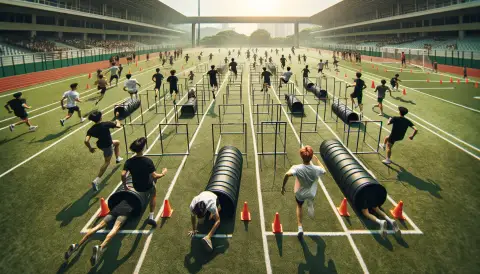
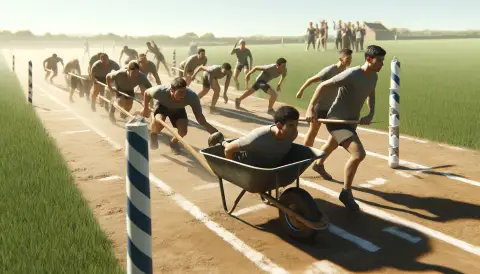
Two or more teams. One player inside the wheelbarrow and one carrying the wheelbarrow. They go through a circuit and the first to cross the finish line wins.
Players stand around a table. Music plays and players have to do a bottle flip until the bottle stands still. When they succeed they pass the bottle to the next player. When the music stops the player with the bottle in his hand is eliminated.
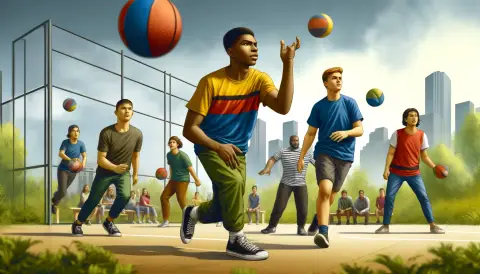
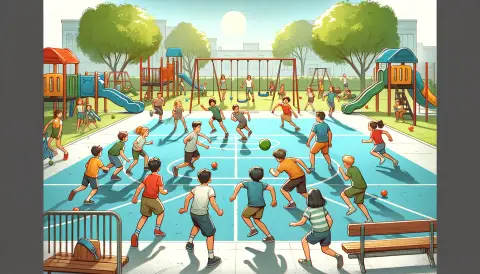
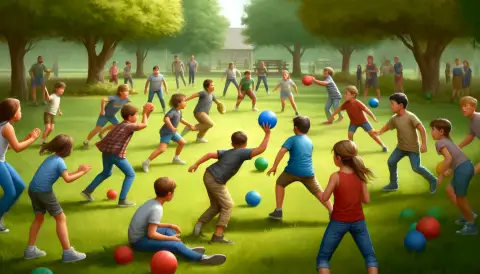
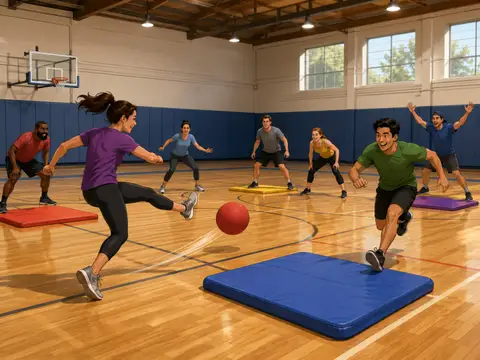
Cannonball or Dodgeball is a fun game where the players play against each other, one player has the ball and has to throw and hit the ball to other players. The player with the ball can only take three steps before throwing. If the ball hits a player and then touches the ground the player is eliminated. If the ball hits a player and then another player catches it before it touches the ground the game continues, no player is eliminated, if the ball hits a player and then the player catches the ball before it touches the ground the player who threw the ball is eliminated. When a player is eliminated he has to wait until the player who eliminated him is eliminated to play again.
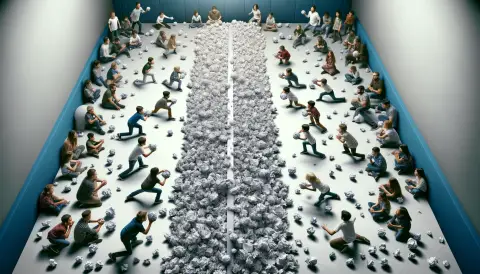
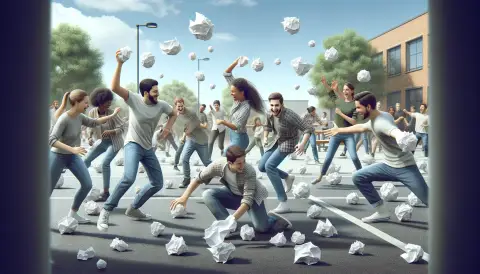
Collect a ton of scrap paper (in most churches, just place a box next to the copier for 3 or 4 days!) Have the group divide in half and strategically place themselves around the room. Give the room a middle border. They aren't allowed to move and there should be an ammo pile towards the back. Give them 5 minutes to crumble all their ammo, and then cry WAR! After ten minutes of throwing paper, whomever has the most on the their side is the losing team
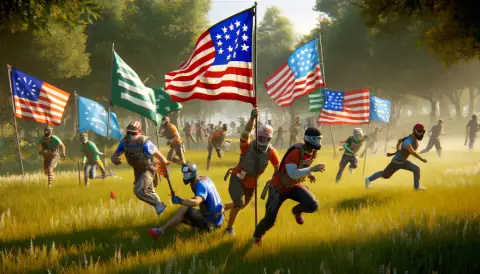
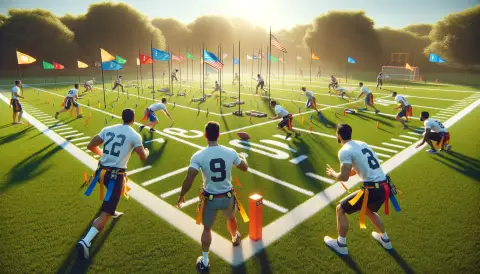
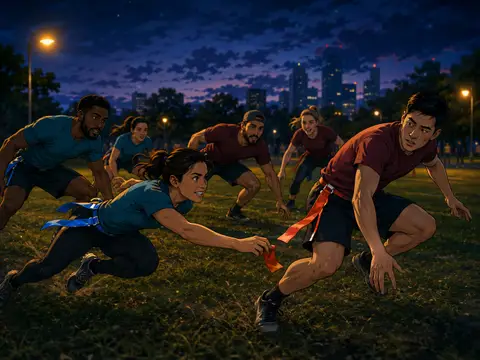
Outpost is a team game where players are separated into equal teams and given their own colored flag-football flags which are worn around their waist. The objective of the game is to get the other teams flags. Flags that do not have stars are worth 100 points, flags that have stars counts as 1000 points per star (people that have flags with stars are called generals and are usually hidden by their teammates each round to avoid the other team capturing them). The game starts with one group in a room where they cannot see the other team while the other group is everywhere else. The people outside the room have a slight advantage since they can hide their generals first without worrying about the other team spotting them, also they can do a surprise attack on the other team (groups change starting positions each game). When the bell rings (or whatever you use to initiate and end the game) both teams are now allowed to go after the other team and hide their generals. When you get a flag off the opposing player you will both walk back to the place where a leader is keeping score and tell them how many points you got for your team color, and then return the flag to the other player and go off again getting flags and finding generals. The player who was captured and gets his flag back then counts to ten out loud and puts his flag back on (during this time no one can capture him, he has time to get away and rest)
End of the World, Make a large circle with the rope on the floor, have the group stand in the center of the circle. Now simply pull the ends of the rope thus making the circle grow smaller. The group must try to survive for as long as possible (They will fight for survival) I make a rule of no pushing, however team work is the key, getting people on your back, making a human tower etc. A person is out when they step over the rope.
Everyone — including the designated tagger — spins in place while looking up for a set time (about a minute works). The moment time is called, the dizzy tagger tries to catch as many equally dizzy players as possible within the playing area. Everyone caught becomes a tagger for the next round, and the game repeats until no one is left standing free. Play on soft ground, well away from anything with corners.
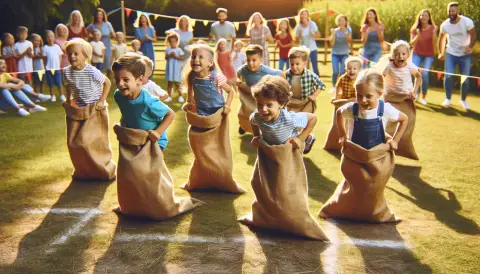
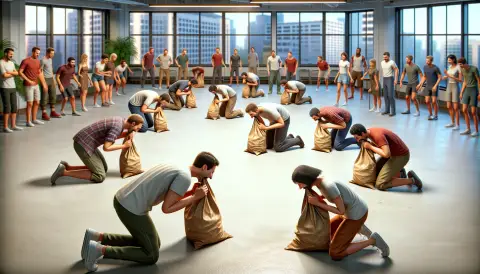
Mark a start and a finish line, and give every racer a burlap sack or a sturdy pillowcase. Players step both feet into their sack, hold the top at their waist, and hop for the finish line when the race starts. Falling over is part of the fun — racers must stand back up inside their sack before continuing. First across the line wins. For big groups, run it as a relay: each finisher hands the sack to the next teammate.
First, you split up into groups of 3-5. You should have at least three teams to play. Each team gets a chair and the caller chooses any random tangible-object noun. Each team is given 5 minutes to create that thing/person from the chair and the items given to them. As a bonus, each team gets one random object. It needs to be something that could be wrapped/tied/stuck to the chair, and be able to get un-stuck. (Toilet paper, multi-colored duct tape, yarn, ribbons, a bag of safety pins with cotton balls, magnets, etc.) As more rounds are played, the game gets sillier and crazier every time--due to the fact that the paper has already been drawn and cut out and used, as well as things that have been pinned together, and other objects that might look "used up". It's a blast, and everyone brainstorms and then builds a wacky-looking creation out of a chair! The prep work is definitely worth it.
Set up a giant bowling alley in any large open area — a parking lot works well, with the lane marked out in chalk. Use a large ball and oversized pins (empty 2-liter bottles are perfect). Players take turns bowling down the lane, scoring a point per pin knocked over. For extra chaos, let the other players line the sides of the alley and kick or push the ball as it passes — limited to one touch each, and only in the direction of the pins.
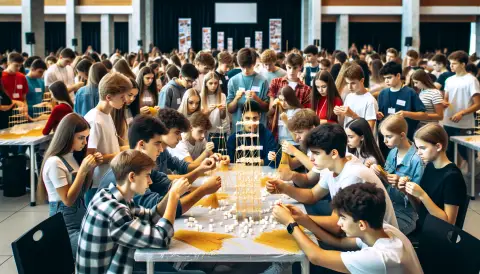
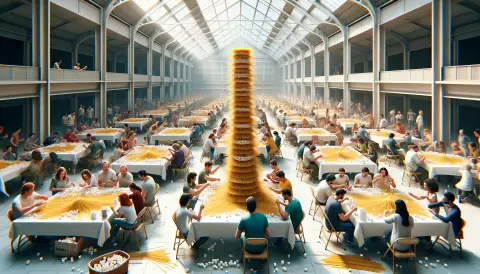
Divide your group into even teams. Designate an area for each team to use to build their tower. Provide each team with an even distribution of supplies - packing peanuts and toothpicks. Explain the rules of the challenge to your group - each team will get the same amount of time (5-15 minutes, depending on what suits) to build the tallest freestanding tower they can out of only packing peanuts and toothpicks. When the time runs out, teams must stop building their towers and let them stand freely on their own. If the tower falls down, that's too bad - the height is measured to its tallest vertical point. The team with the tallest tower wins!
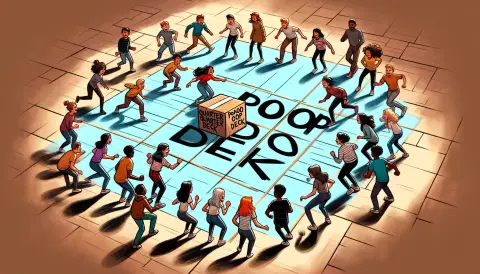
Use tape to create large boxes on the floor or ground. Each of these boxes is a deck. Students gather in one of these decks -- the poopdeck, quarterdeck and halfdeck. The leader calls out a "deck" and all the students move to the deck called out. The last student into the deck is out of the game. The game continues until two students are left. You can yell out commands too instead of moving them to another "deck." -- like "hit the deck" (everyone goes face down, last one down is out)… "swab the deck" (everyone on their knees) … very, very fun. Be creative!
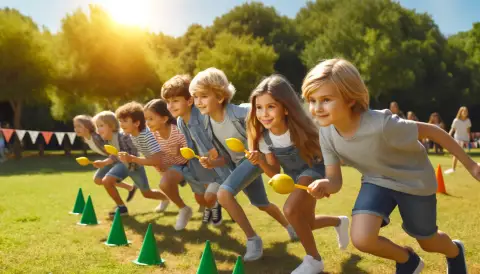
Participants balance a lemon on a spoon and race to a designated point. If the lemon falls, they must go back to the starting line. The first person or team to reach the finish line without dropping the lemons wins.
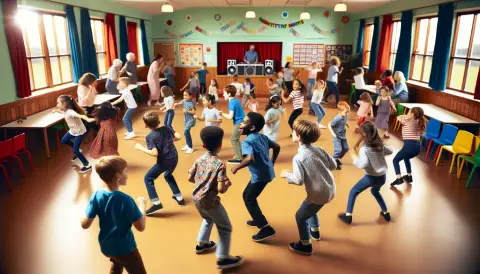
Based on the game for Kinnect or Wii, this is a simple fun, high energy group game for your students. Think a little of "Follow the Leader" meets the dancing video game..LIVE! You can honestly play in anywhere or any time you just have to have some music and a few students. It is great for an up front challenge, a full group game, or simple a time killer as you wait to get started. Have one person, leader or student stand up in front of the group to be the "dance avatar". Select 2-4 player or up to as many as you want to follow along. Put on a great dance song or beat and have your "avatar" bust out their best or craziest dance moves, while players try to follow along. The winner or winners, if you want to have one is the person/people who keep up the best with the "avatar". If you are doing an up front version you can have the crowd vote or if you doing a bigger group version you can have adult leader walking around "tapping" people out to leave the dance floor, dance marathon-style.
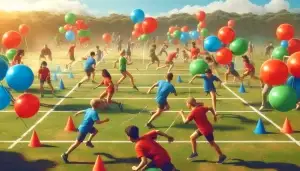
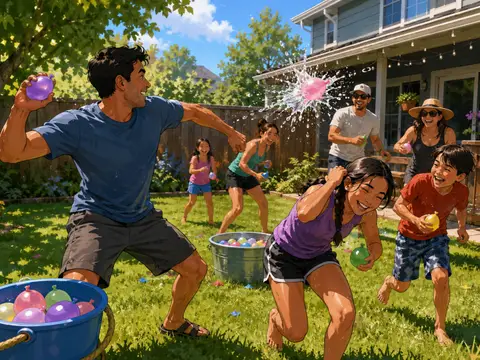
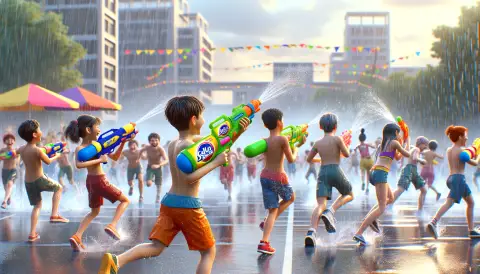
"Water Bomber" is typically a fast-paced, action-packed game played outdoors, especially popular during summer months or at pool parties. In this game, participants use water balloons or water guns to soak opponents. The game's setup and rules can vary widely, but common versions involve teams or free-for-all scenarios where players aim to drench others while avoiding getting wet themselves. If someone gets hit with a water bomb then they must go to jail for a couple minutes. "Water Bomber" is well-loved for its refreshing fun and the excitement of splashing and dodging in hot weather, making it ideal for both children and adults seeking a playful way to cool down.
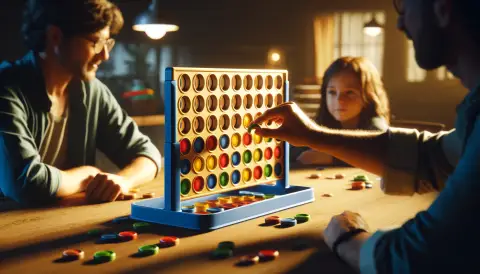
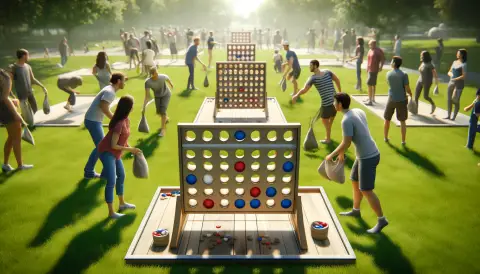
Connect 4 is a two-player connection board game in which the players first choose a color and then take turns dropping colored discs into a seven-column, six-row vertically suspended grid. The pieces fall straight down, occupying the next available space within the column. The objective of the game is to be the first to form a horizontal, vertical, or diagonal line of four of one's own discs. Connect 4 is a solved game, with the first player being able to always win by playing the right moves. The game is straightforward yet strategic, as players must anticipate their opponent's moves and counter them effectively to win.
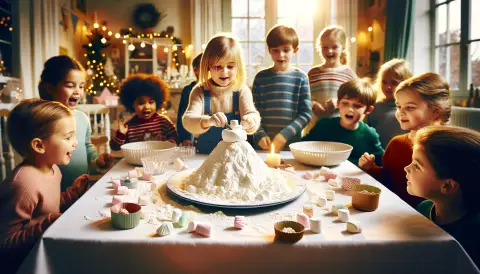
First fill the bowl with flour then put the plate over it and then flip it over making sure the plate is on the bottom. Put it on the table and take the bowl away. Put a marshmallow on top carefully. Now get the kids to take in turns cutting the cake made of flour into slices. If it collapses when the child cuts it then they have to stick there face in and try and get it out. You can play this game as many times as you want but make sure that you replace the marsh mellows. It is safe to keep using the same flour over and over again. Make sure that you cover the table to protect it from all the flour.
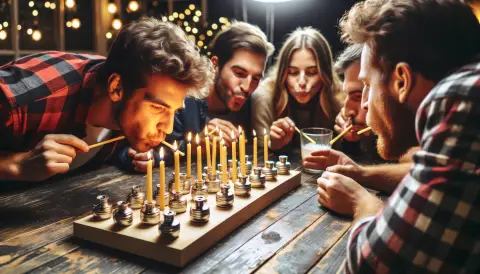
Line up everyone is one long line then give each child a party blower and empty match box. On their knees, each player must blow the match box to the other end of room using the party blower. First player to other side wins!
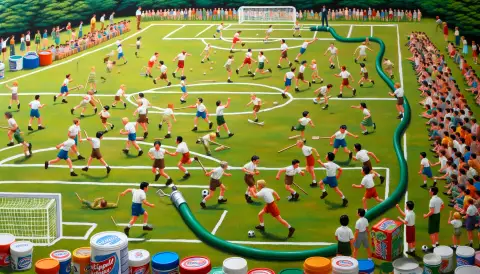
In this game, you divide a wide field into two halves with a long hose and scatter light, unbreakable objects like empty ice cream containers evenly on both sides. Split players into two teams, each starting on their designated side. The goal is to collect as many containers as possible onto their side. Players remain safe on their side but can be tagged when crossing into the opposing side. Tagged players must squat and wait for a teammate's rescue tag. Rescued players can be tagged again while escaping. To collect a container, players must cross to the other side, grab one container, and bring it back without being tagged. Dropped containers stay where they fall. Players can either run to rescue teammates or use stealth to blend in with the opposing team. If questioned directly or touched, they must reveal their true team.
Play the classic card game Spoons with one twist: the spoons aren't in the middle of the group — they're somewhere else entirely. Place them across the room, up a staircase, or (best of all) outside, with obstacles between the cards and the spoons. Play proceeds as normal: pass cards around the circle until someone collects four of a kind, at which point everyone sprints for a spoon. One player comes back empty-handed and is out — remove a spoon and deal again. The farther and messier the route, the better the game.
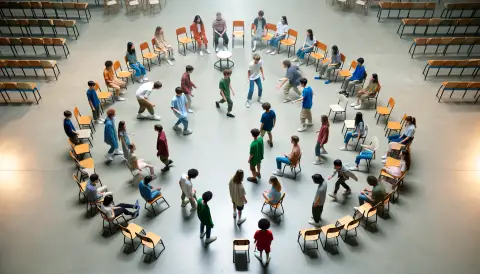
Get the youth to make a circle with the chairs facing inwards. There needs to be one less chair than there are people. One person stands in the middle of the circle. The people sitting on chairs then have to make eye contact with someone across the circle (they cannot make eye contact with someone next to them). Once they have made definite eye contact, they must get up and quickly swap seats. The person in the middle must also try to find a seat. Everyone does this all at once creating CHAOS!
Ships Wreck, Divide the kids into teams of around 10 people. Each team will need a "ship" - this could be a hula hoop or something else of a similar size (small blanket, plank of wood). Each team will start at one end of the playing field and their object is to run to the other end while carrying their ship. When the instructor yells "SHARK", every team needs to immediately drop their ship on the ground and then jump on top/inside of it. The first team with everyone on board of their ship will get a point. Crossing the finish line first could gain the team three points. You can repeat this game as many times as you want.
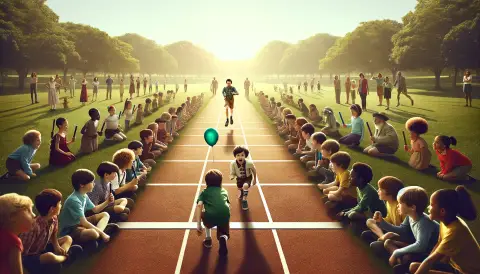
Each team forms a straight line behind the start line. When the relay starts, the first team member carries the second team member to the finish line. Once they arrive, the person who was carried runs back to the team and carries the next person to the finish line. The game ends when all team members have crossed the finish line.
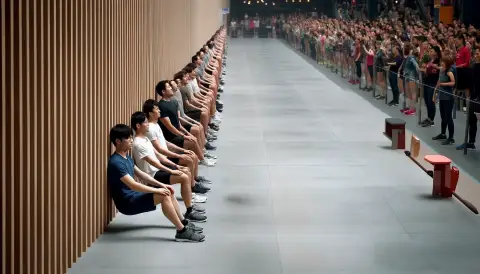
No equipment needed — just a smooth stretch of blank wall. Everyone stands with their back flat against the wall and walks their feet forward, sliding down until they're "sitting" on an invisible chair: thighs parallel to the floor, knees at a right angle, back still against the wall, hands resting on thighs or knees (no pushing down for support). Then it's simply a matter of who can hold it. The last player still in position wins, usually with trembling legs and a lot of commentary from those who already collapsed.
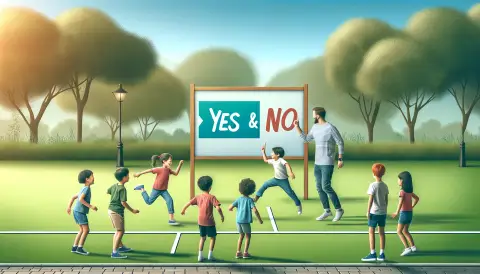
The group stands in the middle of a room or between two markers, with one wall or marker designated TRUE and the opposite one FALSE. The leader reads a statement — "Bats are actually blind" — and on "Run!" everyone sprints to the side they believe is correct; staying in the middle is not allowed. Score it either way: first player to touch the correct side wins the round, or everyone on the wrong side is eliminated until a champion remains. Works with any subject matter — trivia, review questions from a lesson, or statements about people in the group.
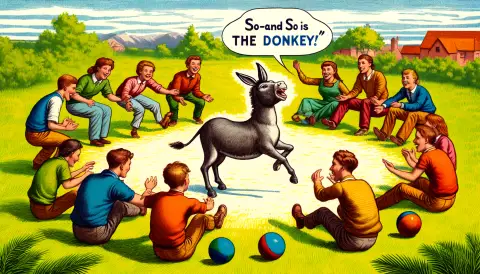
Everyone circles up, and two people start with a ball each. One ball is to be passed around the circle TWO people to the left, and the other ONE person to the right (or any other combination of the balls going in different directions). If ever someone is the circle ends up with two balls in their hands at the same time, they go into the center of the circle on their hands and knees, kick their feet in the air, and make donkey noises, while the rest of the circle chants "so-and-so is the donkey!" (or any other fun suitable mildly humiliating action). Continue for 10 seconds or so and send the balls around again.
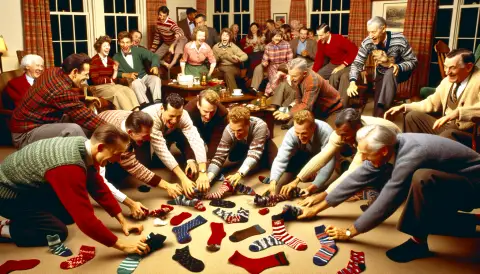
Get everyone to take their shoes off. Give two spare socks to anyone not wearing any. Everyone gets down on their hands and knees. When the leader says "Go!", everyone has to try and steal everyone else's socks, while protecting their own. Once both your socks have been taken, you are disqualified, and you must sit out. The last person with at least 1 sock on wins! Alternatively, you can divide into groups, and the team with the most socks wins!
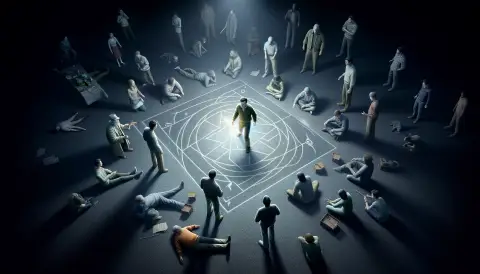
Make a room be able to go from pitch black to full light with the flick of a switch, and I'm serious pitch black. Cover up emergency lights and exit signs, unless it's illegal in your area. Shuffle and pass out a deck of cards. Make sure that there is only one Ace and one King in the stack. The student who draws the Ace is the wizard, and the student who draws the King is the police officer. When everyone has drawn cards, turn off the lights. The job of the wizard is to walk around among the students and put people to sleep by tapping both of their shoulders. Once a player is asleep, they must fall to the ground. If a player "runs into" a sleeping person they yell out "SLEEPER IN THE DARK." At this time the lights need to be turned on. If the person sleeping was the police officer, the game ends. Everyone should guess who the wizard is, and if the police officer chooses to reveal him/herself they can make one person show their card. They do not have to reveal their identity. If the guess is correct, the game is over. If not, the lights turn back off. The police officer only gets one chance per round. This repeats until all people are asleep, the officer is put to sleep, or the wizard is identified. When this is over, take up the cards, shuffle, and play again. Evidently there is no way to win. The game is incredible fun, and students usually end up playing for hours.
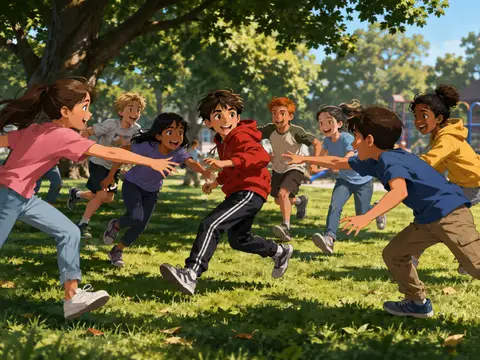
Tag game where players must avoid being tagged. Once you've been tagged your arms and legs can be used to tag other people, except your bottom must remain on the floor. The last person to be tagged wins!
Players pair up: one is the camper (usually the smaller partner), the other is the tent. Form a circle with the tents standing arms-raised like a roof and the campers sitting cross-legged in front of them. When the leader shouts "Campers!", every camper crawls through their tent's legs, runs a full lap around the outside of the circle, and crawls back through to their spot — last one back is out, along with their partner. On "Tents!", the tents run the lap instead. No pushing, and overtake only on the outside of a slower runner. Keep calling until one pair remains.
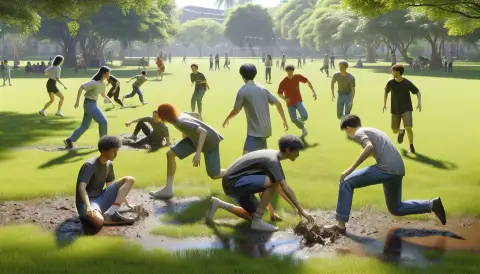
In stuck in the mud, one person is "it". When they touch someone, that person is "frozen" in place. The frozen person cannot move and must stand with their feet apart. The only way they can become unfrozen is if a person crawls under their legs. Play continues until all the players are frozen. Then the last person to be frozen is "it" for the next game.
While the music is playing, all players must dance around the room and when the music stops players must bop down. Last person to bop down is out. Remaining players will await further instruction, being one of the commands from below. Players who are not in a group are out. The music starts playing again and the remaining players dance around the room. The game ends with a "shoot out" between the last two players. "Strike a pose" - each player strikes their best pose, worst pose is out. "Camping" - one player kneels of the ground and another player stands over them like a tee pee. "Traffic lights" - one player sits cross legged on the ground, one player kneels behind them and one player stands behind them both, all players must "blink" with their hands. "Top Gun" - three players stand in a line shoulder to shoulder, the outside players pretend to be the wings of the plane while the middle player is the pilot and one person stands in front of the pilot pretending to be the nose of the plane. "Can Can" - five players line up shoulder to shoulder and link arms and do the Can Can. "Brady Bunch" - three players kneel on the ground and three players stand behind them, all players must clasp their hands and have big smiles.
Basically, all students stand in one straight row. According to if they are right or left handed, that's the shoe they'll slip off a bit. Example: Keira is right handed. So Keira will slip off her right shoe a bit. One of the teachers will say '1...2...3...GO!' When the teacher says 'GO!' all the students will step forward a bit and kick off their 'slipped off a bit' shoe. The student with the shoe kick that's farthest wins.
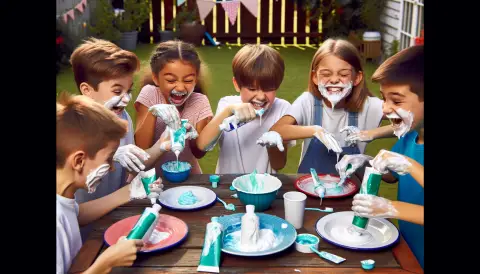
Give the kids either in pairs or as individuals a plate and a tube of toothpaste. The bigger tubes work best. Tell them the challenge is to get all the toothpaste out of the tube as quick as possible. Watch and see how quickly the squirt it onto the plate. Then once the toothpaste it out let them in on the secret. The actual challenge is to see how much toothpaste they can get back in the tube. Almost impossible. Gets really messy really fast. For the most part the toothpaste stays on the plate and all over their hands. Some try to blow into the empty tube of toothpaste to open it back up again. Doesn't work but worth suggesting to see them try. Point of the game is to be careful with your words. They can come out super fast but don't always go back in so easily and can get messy if said in the wrong way.
Start off the game by choosing 1 person to be 'it' and have a designated tag area for the game to run in, preferably a large open area (so the other youth can't hide behind, or run between small objects to evade). This 'it' person must run around and tag people, and every-time the amoeba tags somebody they must hold hands to become 'part of the amoeba'. Now both of these people are 'it' and must remain connected at all times by holding hands, progressively more and more people will become part of the amoeba. In order to tag the next person, they must form a circle around them by holding hands (like a group hug). If anybody gets caught in the completed amoeba circle they must become part of it. The trick is, the amoeba is allowed to run around as a chain (not a circle) in order to trap people in a corner. The other people are allowed to run through gaps in the chain, but if the amoeba is quick enough at forming a circle again around the player then he/she is caught. The smaller amoebas are faster, but as it gets bigger it requires more teamwork and communication to work as a group to catch another person. Everybody in an amoeba must be holding hands and remain in a chain/circle at ALL TIMES.
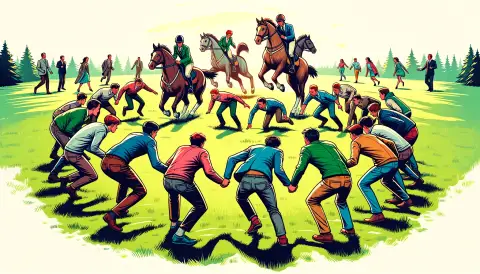
Players pair up with someone of similar size and decide who is the horse and who is the jockey. The horses walk in a small circle in the middle, one behind the other; the jockeys form a larger circle around them, facing the opposite direction. The leader calls "Horses, go!" and the inner circle starts moving, then "Jockeys, go!" and the outer circle runs the other way. On "Jockeys up!", every jockey sprints to find their horse and jump on for a piggyback — the last pair up is eliminated. Call direction changes to keep everyone guessing, and play on soft ground.
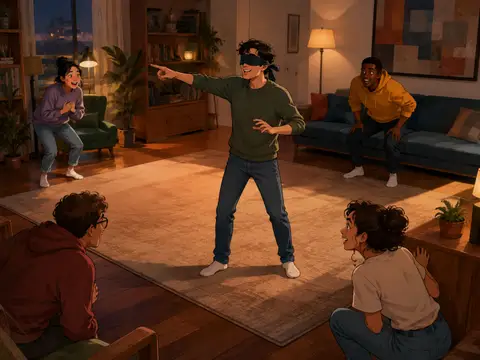
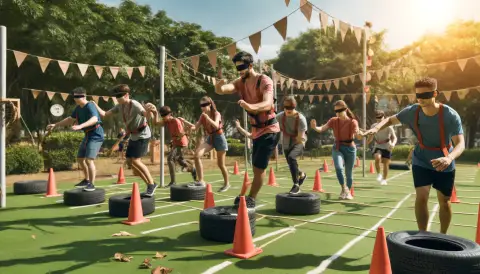
1. You'll need to play in a room with four corners, so it can't be circular. 2. Each corner must be labelled with a number, from 1-4. 3. The person who is blindfolded (preferably some type of facilitator) will go into the middle of the room and begin counting to ten. All of the other players must scramble for one of the four corners. If anybody cannot make it to a corner in time, they must be eliminated for the round. 4. When the countdown is done, the facilitator will yell out a number between 1 and 4. Anybody in the corner of that number is eliminated for the round. 5. This pattern goes on until there is only one other person standing. They win!
Everyone gets into groups of three. Two people stand facing each other and join hands to create an arch they are the tree, the third person crouches underneath it and becomes the squirrel. You need one extra person to be the 'caller'. (If you have odd numbers you can have two callers) The caller can shout one of three things: 1 - "Hunter" If hunter is shouted then all the squirrels run to a new 'tree' the 'caller' then tries to steal the place of a squirrel. If they are successful then the person left without a tree becomes the new 'caller' (*The trees do not move) 2 - "Fire" If fire is shouted the trees move to a new squirrel, they must find a new partner to create a tree over a squirrel. The 'caller' then tries to steal the place of a tree leaving someone new out and they become the new 'caller'. 3 - "Earthquake" If this is shouted then everyone moves and takes a new position as either a tree or a squirrel. Again the 'caller' steals someone's place and a new 'caller' is made.
It's similar to "Doggy doggy who's got your bone" but a little different. Get to group to sit in a circle. Put a chair in the middle. Choose one person to sit in the chair and blindfold them. Place a set of keys or an object under the chair in the middle. Then the game begins. One of the leaders who isn't playing will select a player sitting in the circle group to sneak into the middle and try to steal the keys. Meanwhile, the blindfolded player on the chair has to listen carefully to try to hear where the stealing person is. When they think they know where the stealer is, they must quickly point. If they point at the player, the player is now out and they swap around. However, they are only allowed to point 3 times. If the stealer manages to take the keys without being caught, they must return to their position and then the whole group chants "Man diddy watcher someone's got your keys." The middle player takes their blindfold off and gets three guesses as to who has their keys.
1. Get a large group of youth together and split them into two teams. 2. Give the members of each team a colored cloth to use as an armband so that they can easily identify friends and foes. (You can also use different colors of water-guns to identify teams.) 3. Give each person a water-gun, a string, and an alka-seltzer tablet. Note: If you allow youth to bring their own water guns, specify a maximum size in order to prevent one person with a large super soaker from dominating the game. 4. Have each youth tie the tablet around their neck with the string. It must hang down the front of the shirt and be visible. 5. Have a designated refill point for each team. A couple buckets of water will do the trick. 6. Have kids wear old clothes as this can get a little messy. Rule out white t-shirts to prevent embarrassment when they get wet. Let everyone run around in a large area squirting each other with the squirt guns. If a person's tablet dissolves, he's out. First team to eliminate all the opponents wins.
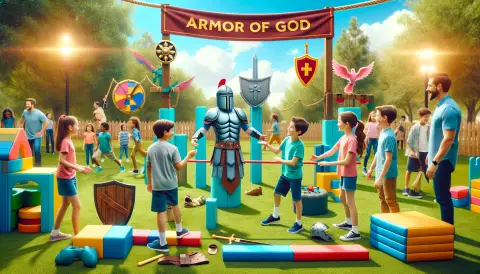
Set up an obstacle course with different challenges representing each piece of the armour of God (e.g., a balance beam for "feet fitted with the readiness that comes from the gospel of peace," a foam sword for "the sword of the Spirit"). Participants navigate the course while discussing the significance of each piece of armour.
Divide the group into teams and set up stations representing each of the fruits of the Spirit (love, joy, peace, patience, kindness, goodness, faithfulness, gentleness, self-control). At each station, participants complete a challenge related to that fruit before moving on to the next.
The Mafia Game is a social deduction game where players are secretly assigned roles as either Mafia members or Townspeople. The Mafia's goal is to eliminate the Townspeople without revealing their identities, while the Townspeople aim to identify and eliminate the Mafia. Through alternating Night and Day phases, players discuss, accuse, and vote on who they believe is part of the Mafia until one team achieves its win condition. It's a game of strategy, deception, and deduction that requires players to bluff and outsmart their opponents.
This game can either be done using a video camera and a TV, or just acted out on the spot. Split your group up into teams and give each team a random object which they will need to advertise and maybe something like a theme (i.e. "school" or "hospital") that they will need to run with. Send each team off to prepare their commercial then either get each team to individually film their ad, or just bring them all back to the hall and get them to act it out in front of each other. Maybe have some light-hearted judges on the side also?
Discover Avalon, an immersive social deduction game set in Arthurian legend. Use strategy and deception as loyal servants of Arthur or minions of Mordred to complete quests and shape Avalon's fate.
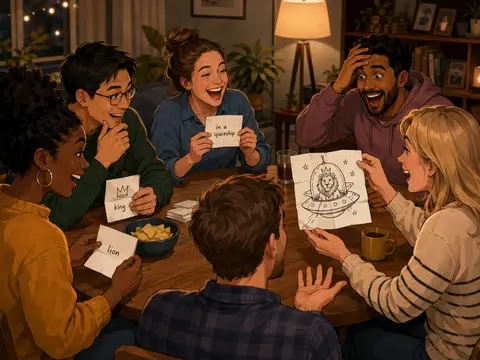
A mash-up of Pictionary, charades, and sculpting. Prepare a list of guessable words, split the group into teams, and give each team paper, pens, and a tray of modeling clay. Each round, one player per team comes to the leader, rolls a die, and learns the word plus how it must be communicated: 1–2 act it out, 3–4 draw it, 5–6 sculpt it. They race back and perform for their own team, and the first team to shout the correct word scores a point. Rotate performers each round; highest score wins.
A simple bible quiz is a great way to help kids comprehend bible passages and stories. It can be used a tool for learning in small groups, an ice breaker for a big group or maybe as a round in a quiz night. The questions in the quiz could be general questions from all over the bible, or could be restricted to a particular bible story or passage. This is up to you to work out what will serve your youth group best. It works really well in the setting on an "introduction night" for the series/book you're about to start working through. It can be done at the end of the session to test and remind the kids of what has been discussed. The questions used in the bible quiz can be simple answer questions, multiple choice and true or false. Or you can get creative - maybe use a PowerPoint presentation to display some graphical questions as well. You could do the quiz as an "open bible" quiz which will encourage kids to be using their bibles to find answers as you go and is a good way to help kids "get to know" their bibles.
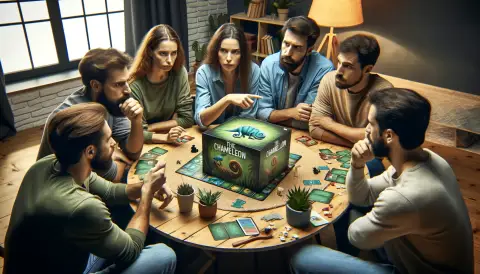
The Chameleon Game is a social deduction game where players must figure out who the "chameleon" is based on their answers to a series of questions. Players sit in a circle or around a table. Each player is given a card that contains a list of related words or prompts, except for the chameleon, who receives a card with no information other than the word "chameleon." The game consists of several rounds. In each round, one player is selected to be the moderator, who poses a question or gives a prompt related to the words or themes listed on the players' cards. Each player, including the chameleon, takes turns giving a response to the question or prompt. The chameleon's challenge is to blend in with the other players' responses without revealing their lack of knowledge about the secret word or theme. After all players have given their responses, players discuss among themselves and vote on who they believe the chameleon is. If the majority of players correctly identify the chameleon, they win the round. If the chameleon successfully avoids detection, they win the round instead.
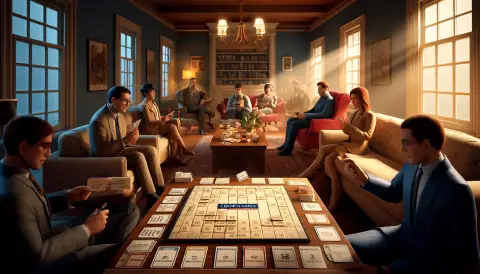
Codenames is a word association game played on a 5x5 grid of word cards. Each team has a spymaster who provides single-word clues followed by a number, indicating how many words on the grid relate to the clue. The operatives, seated opposite the spymasters, discuss and guess the words based on these clues. Once an operative selects a word, the spymaster reveals if it belongs to their team, the opponent, is neutral, or is the assassin. Guessing an opponent's word ends their turn, guessing a neutral word ends the turn without penalty, and guessing the assassin results in an immediate loss. The game involves strategic thinking and careful word association, aiming to identify all words of one's team while avoiding the assassin. The team that successfully identifies all their words first, or avoids the assassin while making correct guesses, wins the game.
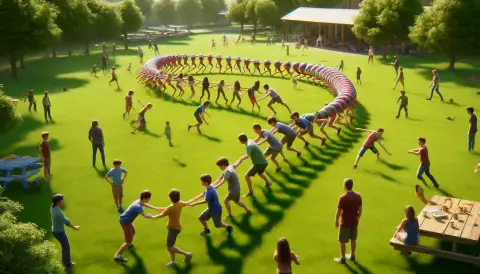
First, everyone finds someone and plays basic "Rock-Paper-Scissors" with them. Then the loser attaches themselves onto the winners by grabbing their shoulders like a "train". We are going to call that pair "team A". "Team A" then finds another team or pair (Team B) to verse. If "team A" beats "Team B" then "Team B" has to attach to the back of team A's train. That group verses another group and so on eventually every group in the room is attached in one big dragon and they make a loop around the room. It is not really as confusing as it sounds. A prize can be awarded to the person at the front of the dragon.
Strings are tied on the cans. Have teams line up a short distance away and throw rocks at the cans. One point is given every time a can is hit. Have teams rotate through their team members after every throw. For added level of difficulty, team members must throw with their opposite hand.
This team-building activity starts by splitting participants into pairs. Each pair stands back-to-back with hands raised and attempts to sit on the floor without falling. Once seated, they must stand back up, still with hands in the air. This exercise encourages teamwork and coordination. After successfully completing the task, teams are shuffled and expanded to groups of three, repeating the same sit-and-stand process. Following this, groups are further increased to four members, continuing the challenge. This versatile game is effective for groups of various sizes, ranging from four to twenty participants, making it an excellent icebreaker. It fosters collaboration, communication, and trust among participants, setting a positive tone for any group activity or event.
Divide into Girls and Boys teams. Alternative with trivia questions: Ask the girls questions that only boys would know the answer to, and ask the boys the questions that only girls would know the answer to.
A camp-wide economy game. Split into small teams, each belonging to one of four categories. Teams travel between simple challenge stations, earning money for each one completed, and spend it on items at a central bazaar. Away from the bazaar, teams may challenge teams from other categories to steal their money — and roaming "bombers" can latch onto a team by tagging a member, blowing up after a set time and costing the team everything unless it passes the bomber on by tagging a different team first. Finish with a story read aloud by the leader: teams that bought the right items at the bazaar survive each chapter, and the team that lasts longest wins.
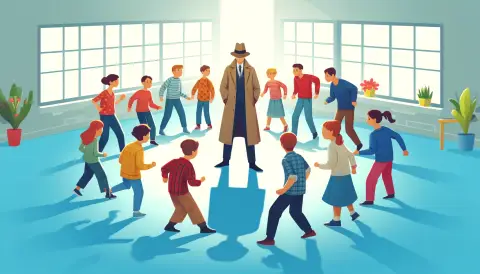
All players stand in a large circle. One player is chosen as the detective. Detective leaves the circle as the rest of the players decide who the murderer will be. Detective rejoins the circle. Everyone in the circle can carry on having discussions, etc. If the player has the murderer wink at them, they die (and can do so dramatically for effect). Detective must identify who the murderer is within 3 guesses.
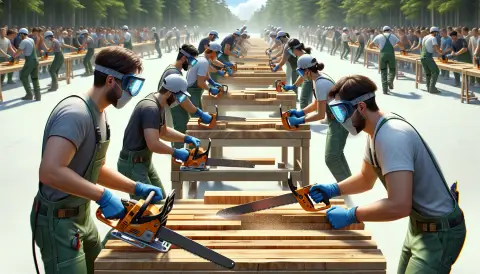
Set up one log or thick piece of lumber per team on a stable sawhorse, with one handsaw per team. Teams line up, and on "Go!" the first player saws until the leader calls "Switch!" (every 20–30 seconds works well), then hands the saw to the next teammate. The first team to cut clean through their log wins. An adult supervises each saw at all times: one sawyer per log, everyone else behind a marked line, and gloves and safety glasses for the person sawing.
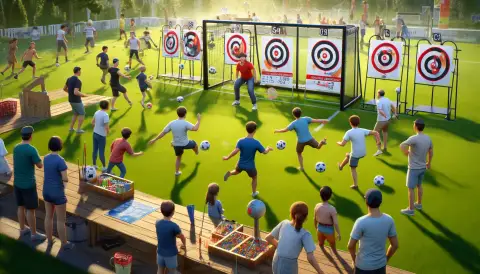
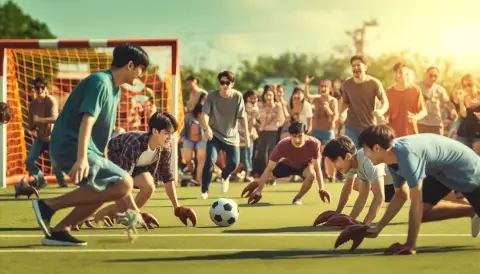
Section off a small corner on the bottom and top of a soccer net. Teams must alternate between team members, trying to kick a ball through the target. Award points for kicking the ball through target, with extra points for kicking through the top target.
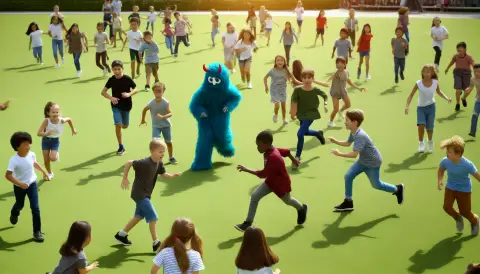
Escape the monster is one of the interesting birthday party games for kids. Where all the children are supposed to be lined up on one side of the room. Then, one or two other children will be made to pretend monsters in the middle of a forest. The children then have to run across the forest without getting caught by the monster. If the monster manages to catch them, they become monsters as well. This fun and frolic will continue until one child gets caught. The last child who has not gotten caught at all is then the winner.
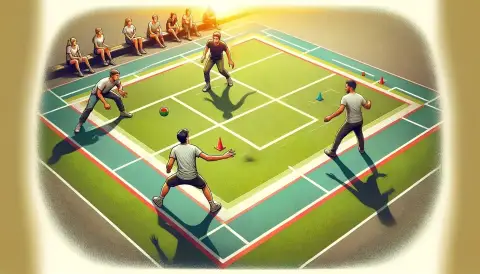
Four players at a time: ace, king, queen and jack. Each one is located in the corner of a square. The ace starts and needs to hit the ball with his open hand and must make the ball bounce off the other's square. The person who receives the ball has to do the same with another square and so on. If a person misses the ball or the ball goes out of the square, that person falls. When someone fights, everyone moves up one place. Now another person can enter the game instead of Jack.
Get the whole group together. The leader running the game calls out a category question (for example - what is your favorite color?). Everyone in the group would then have to start calling out their favorite color to each other and find the others in the group who have the same favorite color as them. When a player finds another player who has the same answer as them they then join together (by linking arms) and continue to go round the group looking for more people with the same answer. After a minute or so (completely up to the leader running the game) the leader can call "STOP". Each group needs to call out their answer. If there are two people/groups who have the same answer but are not linked together then they are eliminated from the next round. Or alternatively, to keep everyone involved, you can give each kid five wrapped lollies or popsticks to start with and they lose one each time this happens. Be creative with the questions you ask: - Favorite pizza topping - Favorite ice cream flavour - Favorite TV show - Favorite band - Favorite book of the Bible, etc.
A game of social deduction where players are divided into two teams, the Resistance and the Spies. The Resistance's goal is to complete missions, while the Spies' goal is to sabotage the missions.
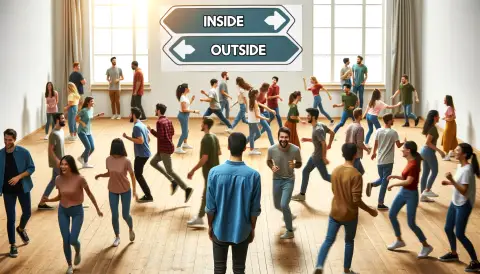
Get the group to stand in the middle of a hall area. The leader of the game will stand at the front of the hall, facing towards the group of people. The game leader will call out a choice to the group, pointing to opposite sides of the room for each option. For example, the first choice could be "inside vs outside". When the game leader says "inside" they would point to the left side of the room, when they say "outside" they would point to the right side of the room. Each of the players then run or walk to the side of the room which they prefer. For example, if I like "outside" more than "inside" then I would go to the right. It's good to do a whole variety of choices and some will provide laughter and some might be more serious. I find it helpful to stop (maybe after a more interesting choice) and get the players to turn to someone next to them and ask them why they chose what they chose. Here are some examples of choices: Nature vs City, Casual vs Dress-up, Inside vs Outside
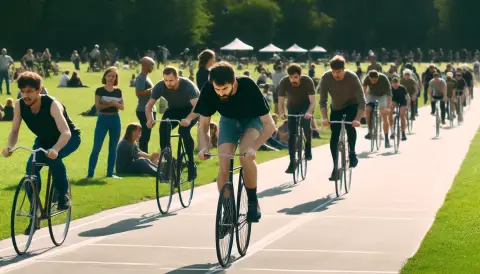
A "slow cycling race" is an event where participants compete to cross the finish line in the slowest possible time. Unlike traditional bike races where speed is crucial, in a slow cycling race, the goal is to maintain the slowest pace without coming to a complete stop.
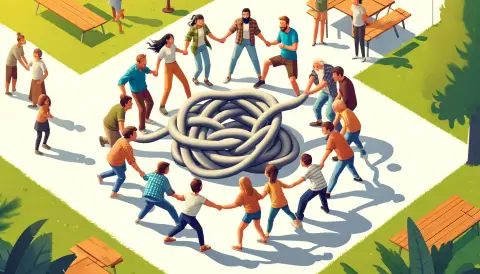
Have the group stand in a circle, reach in and grab someone else's hand (not from the same person), then try to untangle the knot without letting go of each other's hands.
1. Use a book to get the text for a larger section of scripture - maybe a whole chapter - that you are studying. 2. Copy that into the Wordle site and let it generate a Wordle for you. 3. Put the generated Wordle and your book passage onto a single page of paper. 4. Highlight the words in the passage that you want the kids to find in the Wordle. Although this would seem fairly simple, depending on the number of words and the layout of the Wordle, it can be quite difficult. 5. Use the normal incentives to keep the kids focused - first person to find a specific word gets a prize, first finished, work in pairs etc. This website allows you to generate cool 'wordles'. They are like a word cloud where the size of word is in proportion to its usage. The site allows you to generate your own Wordle in many different formats.
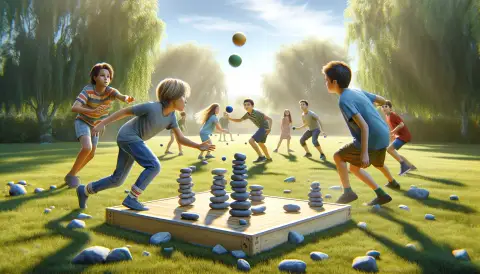
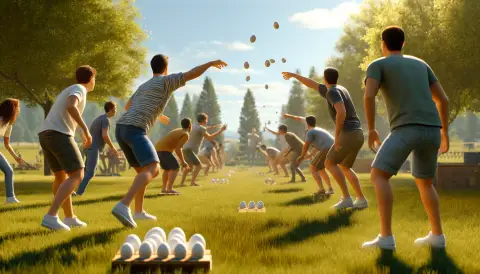
There are 2 teams. One team is the attacking team and other is the defending team. The goal of Seven Stones for the attacking team is to knock down a stack of stones using a ball and then rebuild the stack. While the opposing team tries to prevent it using the same ball by throwing it at the opposite teams players. If the ball hits the player, he is out. If the first team manages to rebuild the stack, they win. The teams have alternate chances of being the attacking team.
Two Rooms and Boom! is a social deduction game where players are divided into two rooms, and a "bomber" must be found before time runs out. Players are divided into two groups, with each group assigned a different room. One room represents the Red Team, while the other represents the Blue Team. Each player is secretly assigned a role card, which indicates their team affiliation and role within the game. Roles may include members of the Red Team, members of the Blue Team, and special roles such as the President, the Bomber, and various other characters with unique abilities. The President is revealed in each room, while the Bomber remains hidden. The objective of the Red Team is to keep their President safe, while the Blue Team's goal is to find and identify the Bomber before time runs out. The game is played in a series of rounds, with each round consisting of a negotiation phase and an action phase. During the negotiation phase, players within each room interact, exchange information, and make deals to try to achieve their team's objectives. Players may share their roles, form alliances, bluff, and strategize to gain information about other players' roles. After the negotiation phase, players vote on which players to send to the other room during the action phase. The goal is to gather information and potentially swap players to gain an advantage or disrupt the opposing team's plans. Throughout the game, players must carefully consider the information they receive, the actions of other players, and the timing of their decisions to achieve their team's goals. The game ends when the timer runs out, at which point the players reveal their roles and determine the outcome based on the success or failure of their team's objectives.
One person is "it" and tries to tag the other players. When someone is tagged, they must freeze in place until another player tags them to "unfreeze" them. The game continues until everyone is frozen.
You get all the chairs in a circle and have the people playing sit on them. Make sure there are no empty chairs. Then pick someone to stand in the middle of the circle. The aim for him/her is to take a seat. Chits are made with certain details for example "Everyone wearing black clothing". The person in the middle reads the chit from the pile of chits and begins to find a seat. The aim for the people sitting is to not let the player in the middle take a seat from them. To stop them from sitting down the players that are sitting down shuffle from chair to chair. Players can change the direction at any time. There should be one less chair than the number of people playing the game so that there will always be one person who does not have a seat and that person can stand in the middle and read the next chit.
Each person writes down a random word on a piece of paper. The papers are collected and redistributed randomly. Each person must then tell a story that incorporates all the words they received.
One person thinks of an object, and the others have 20 questions to guess what it is. Everyone ask the person a series of questions to which he or she can answer with a 'yes' or 'no'.
Freeze Dance is dance game where a song is played and everyone has to dance, but when the music stops, everyone must freeze in place. Those who don't freeze in time are out, and the last person dancing wins. Alternatively, you can also play a Freeze dance YouTube video and copy the dance moves shown in that video. One person can be assigned responsibility to start and stop the music. When the music stops, everyone must freeze. If anyone moves after the music has stopped, then the person is eliminated. Game ends, when there is only one player remaining.
Each player writes down the name of a movie on a piece of paper and places it in a bowl. Players take turns drawing a movie title out of a bowl and acting out a scene from that movie while the others try to guess what is the name of the movie.
Players should pair off into partners (girls with girls and guys with guys is usually better). One player will be the birdie and the other will be the perch. All of the perches make a circle and walk counter-clockwise. While all of the birdies make a larger circle around the perches and walk clockwise. After a few seconds call out "Birdie on a Perch!" and the partners must find each other and the birdie must jump onto the back of the perch. The last pair to find each other is out. Continue until there is only one pair left. For a bit of your own entertainment, call out different walks for the players to do. Such as: walk like a bird, a ballerina, run way model, ninja, etc.
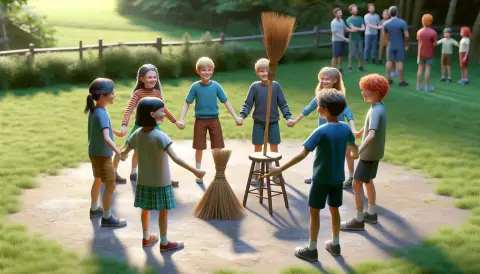
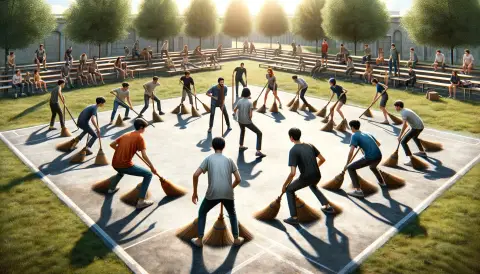
You have a pole (a broom will suffice) and you place the pole on a stool. Everyone needs to gather around the pole and hold hands. The aim is to try and get OTHER people to knock the pole off the stool. You do that by pulling people around you and trying to have them hit the pole. If a person knocks the pole off the stool, they are out. If two people let go of each other, they both are out unless one was about to hit the pole and panicked by letting go, then that person is out.
Pass the package = the package (a prize/gift) is passed around the circle and when the music stops, the person left holding the package unwraps a cape. In each layer there is a word from a sentence, which they have to memorize to put them together at the end of the game and discover the hidden phrase. Continue doing this until the end of the packet.
Everyone stands in a big circle and then grabs onto two different peoples hands (not the people standing on either side of them). Once everyone is holding onto two other peoples hands then the aim is to work together to untangle the circle. Depending on how many people you have this can take a long time or can be completed very quickly.
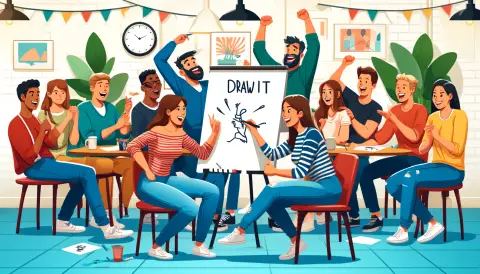
One person describes an object, and everyone else draws what they think it looks like based on the description. The person who described the object then reveals the actual object, and the group compares their drawings to see who came closest.
One person starts by saying "I went to the store and bought..." and names an item. The next person repeats the first item and adds a second item. Each person must remember all the items mentioned before their turn and add a new one. The round ends when the player fails to list an item in the correct order.
A reverse hide-and-seek game where one person hides and everyone else seeks. When a seeker finds the hider, they hide with them until everyone is squished into the hiding spot, like sardines in a can.
Pick a category (e.g., animals, countries, foods) and start with the letter 'A.' Each person must name something in that category that starts with the next letter of the alphabet. The game continues until you reach 'Z.'
Write out sentences or dialogues of a book, movie, song, etc. on different pieces of paper and scramble them up. Teams or individuals race to unscramble the sentences or dialogues and put them in the correct order.
One person selects a word from the dictionary, and everyone else must come up with a definition for it. The person who chose the word reads out the real definition, and the person with the most creative or funny definition wins a point.
1. Get players to sit in a circle facing inwards. 2. Pick a player to start. Tell this player to come up with a sentence or phrase and then whisper (or "pass it on") to the person next to them. 3. They must only whisper it once, even if the player next to them asks to hear it again. 4. Each player will then whisper it to the next player around the circle. 5. When the final player receives the whisper they must say what they heard out loud to the whole group. The starting player can then say what the initial phrase was and the group can marvel at how well they did in keeping the phrase correct, or laugh at how much it changed!
1. If I went to Mars is a fun memory game where the game starts by one person saying their name and the sentence 'If I go to Mars I would take a', and end the sentence with object. 2. The next person begins their sentence by saying their name and then the following sentence, 'If I go to Mars, I would take (the first person's name and object) and name of second object. 3. Then, the third person then continues and says their name and includes the name and object of the first 2 people in their sentence and gives a third object. 4. This goes on till a player does not say the name and object in the right sequence. The player is then eliminated. 5. Game ends where there is only one player remaining.
Screamer is an exciting, high-energy game perfect for large groups. Get the group to stand in a circle facing inwards. Choose one player to stand in the center of the circle. This player needs to control the pace of the game. They must firstly say "heads down" and the rest of the group in the circle must immediately look down & close their eyes. When the center player says "heads up" all of the players in the circle must then look up and focus their eyes across the circle at a random person. If they lock eyes with someone else (without moving their eyes) both players who locked eyes must run to the middle of the circle screaming/yelling as loud as they can. They need to get to the vacant spot on the other side of the circle as quickly as possible. The player in the middle needs to get there before them so they can swap out. When multiple players lock eyes, there are obviously multiple players running through the center of the circle screaming and it can become a good, fun, energy-expending game!
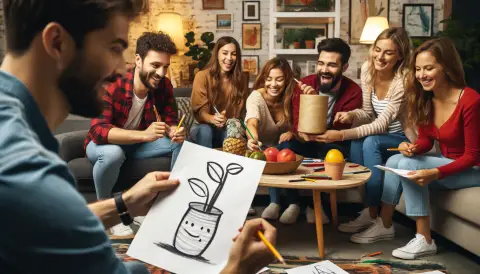
Pictionary is a couch game where we can create cards with scenes, characters, or stories for participants to draw while their team guesses within a time limit.
Improv Storytelling is a couch game where one person starts a story with a sentence, and each person adds a sentence to continue the story. The story can go in any direction, and it's up to the group to keep it going.
A lawn game where players use a mallet to hit wooden balls through a series of hoops (wickets) in a specific sequence and direction, ultimately aiming to be the first to complete the course and hit the finishing stake. Finishing Stake: At the end of the course, there's a finishing stake, often marked with a colored top or flag. The objective is to strike your ball against this stake to complete the game.
Commando is basically hide and seek meets red light green light. Choose a counter (preferably a leader/staff member). Their job is to regulate the game and call people out. Pick 5-7 checkpoints in a circular shape spread out around the start/finish zone. These points can be cones laid out or 'that garbage can near the light post' or 'that large tree'. The goal of the runners is to tag all the points and get back to the start zone without being seen by the counter. The counter must remain firmly in the same spot. The runners start running when the counter yells out a number. The counter will choose a number in their head (never less than five, usually never more than ten). He/she will then close his/her eyes and yell out that number very loudly followed by either 'fast', 'medium', or 'slow'. This dictates how many times the counter will say the word 'DOT' in between numbers. Fast = one DOT, Medium = two DOTS, Slow = three DOTS. For example, if the counter yells 'SIX MEDIUM', they will then yell out 'SIX DOT DOT FIVE DOT DOT FOUR DOT DOT THREE DOT DOT TWO DOT DOT ONE DOT DOT UP'
Base is a fast-paced outdoor game that combines elements of Capture the Flag, Flag Football, and role playing. The game ends when one team destroys the other's Home base. To win, a team must outscore their opponent. Teams score points for: Building Field bases = 1 point each. Destroying their opponent's Field bases = 1 point each. Destroying their opponent's Home base = 3 points. In the event of a tie, a short game is played with the teams' Home bases at the two base locations nearest each other. Teams start with no upgrades nor Field bases, and the first to destroy the other's Home base wins (see 'Team Bases' below). Note: Make the teams as balanced as possible, and readjust if necessary. Always make safety and honesty a priority. Flag Football Belts and Flags: Each player and each base needs a belt with 2-3 removable flags that match the team's color. If you have 3 flags per belt, rule modifications will follow in ()*. Certain special units need extra flags or an extra belt. If you don't have extra belts for bases or extra flags for special units, colored bandannas will work.
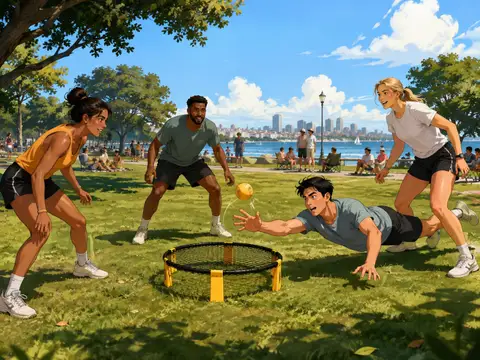
A team sport played with a small ball and a circular net, where players try to hit the ball onto the net so that it bounces off and can't be returned by the opposing team.
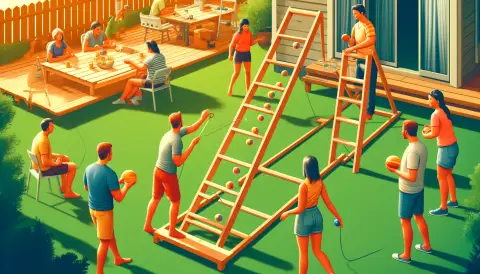
Players take turns throwing bolas (two balls connected by a string) at a ladder-shaped target, trying to wrap the bolas around the rungs to score points.
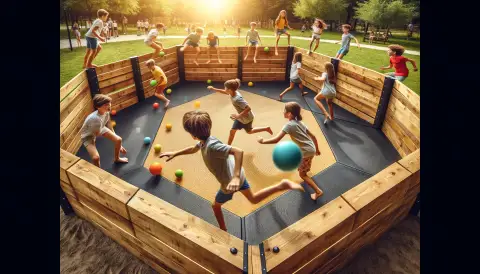
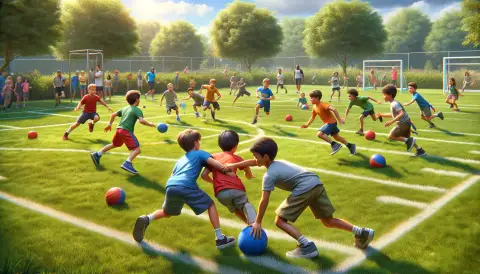
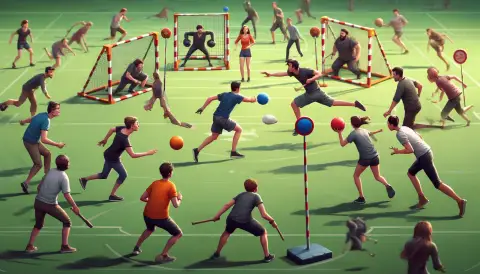
A variation of dodgeball played in a pit or arena, where players try to hit each other below the waist with a ball while avoiding being hit themselves.
Let's start by making a big circle between everyone. When I shout "STOP", everyone should start walking in a circle in a clockwise direction. When I shout "WALK", you stop walking, when I shout "TURN", clap your hands once, when I shout CLAP, turn around once, whether you are walking or standing. In this game, STOP means walk, WALK means stop, CLAP means turn and TURN means clap. We'll keep moving in a clockwise circle with the game, but if you don't follow one of the instructions, you're out! We will keep playing until there is a winner.
Have a group sit in a circle. Every player is secretly given an action they must do on a "trigger". For example, the action might be to cough whenever a certain player in the circle talks. The goal is for someone in the middle to guess all of the triggers.
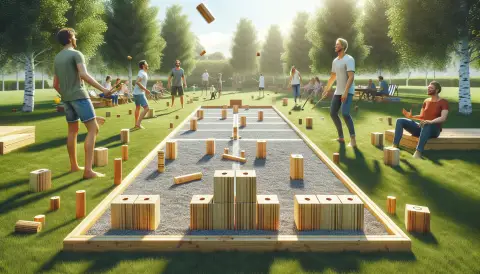
Kubb, a traditional Swedish lawn game, involves players alternately throwing wooden batons to knock over wooden blocks (kubbs) before aiming to knock over the king. Elements of bowling and horseshoes are combined in this game, which is played on grass or sand.
Pick one person to be Mr. Freeze. Have everyone playing the game move around the party as usual. When that person freezes, though, everyone else must freeze too. Whoever freezes last is out.
Medusa is a game where everyone sit around a table. Everyone will put their heads down and count down from three, then have everyone sit up and look at someone else in the circle. If you make eye contact with someone else, you're out. If the person you're looking at is looking at someone else, you're safe. Repeat until everyone is out.
Large group forming a circle. One participant stands in the center in a quadripedal position. The participants who make up the circle shake hands and squat. The one in the center will try to get out, through those in the circle, who will move in all directions without letting go to avoid it. Anyone who "lets" it out or lets it escape should go to the center. There can be more than one person in the middle, to make it more fun.
The Question Game is where two players must only speak in questions. If a statement is made, they are out. Perfect for quick-witted fun and group activity!
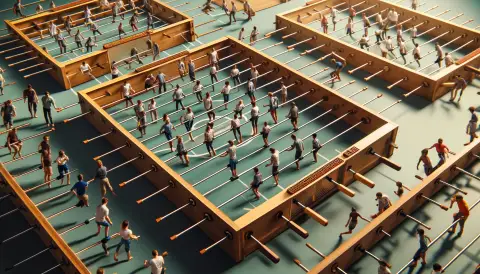
Create a life-size version of the classic foosball game by setting up a large rectangular area with ropes or poles dividing it into sections. Players hold onto the ropes and can only move side to side, like the players on a foosball table.
The Fruits is an exciting game where each participant joins a group and embodies a fruit. They either stand in a straight line or lie down. When the announcer calls out a fruit, the corresponding participants run around the group. The first participant to reach the starting point earns points for their group, while the last to reach the starting point gets eliminated.
Have everyone stand in a circle. First person says "Ha", person beside them says "Ha Ha", person beside them says "Ha Ha Ha" and so on. If you start laughing, you are out.
Two teams compete on a field divided into two halves by three lines. Each team places an equal number of objects behind their baseline. The game involves stealing as many objects as possible without getting caught. To steal an object, players must successfully reach the opposing team's baseline without getting tagged. If players get tagged while on the opponent's half of the field, they wait at the opponent's baseline until rescued. Once players reach the opposing baseline, they steal one object and release one captive teammate. The team that steals the most objects wins.
Person stands in middle of a circle and points at people in the circle one by one. The person pointing has a pattern in mind. They answer either yes or no to whatever the people in the circle say, according to their pattern. People in the circle need to figure out what the pattern is. (Example: Only says "yes" if the guess is a food, only says "yes" if the answerer pauses before guessing, etc.)
Purchase a pack of stickers. Each person must discreetly place all their stickers on other party guests; the first to use all their stickers wins. If they get caught stickering someone, they must accept a sticker. At the end of the evening, you can laugh about how sneaky some people are—and wonder how you ended up with stickers all over your back without even noticing.
A popular Indian game played on a rectangular field with two teams, where players from one team try to tag players from the other team before they can "sit" on the ground and avoid being tagged.
In the game "Sherlock," participants gather, and one person is chosen as the detective, called "Sherlock," for each round. The detective has 30 seconds to examine everyone before leaving the area. During their absence, a noticeable change occurs within the group, such as someone putting on or taking off a jacket, two people swapping places, or someone styling or undoing their ponytail. The key is that the change is easily noticeable. It can involve one person or multiple people in the group. For instance, everyone might untie their shoes for a round. Upon returning, the detective tries to guess the change within a minute. If they lack significant clues, the group can decide whether to provide a hint.
Most Likely To is a game where we gather in a circle. Begin with one person asking, "Who's most likely to trip over their own feet?" (Or another scenario, attribute, deed, etc.) Count down from three (performing a drumroll with your hands is encouraged) and then have everyone point at who they think would be most likely to do said activity. Whoever has the most fingers pointed at them is out. Go around the circle asking a question until all but one person is out. You can skip the eliminations to make the game last longer. This fun party game is perfect for breaking the ice and getting to know each other better. Whether you're with friends or family, asking "Who's most likely to..." questions can reveal amusing insights and create lasting memories.
Choose one player to be the psychologist and have them leave the room. Everyone playing is assigned a strange problem (example: they think they are on the moon, they are late for something, etc.). Psychologist comes back in and must guess each person's problem by asking them questions.
In the game, players form groups of five, linking arms to create a "Dragon." The "Dragon Head" leads, and the "Tail" is a ribbon attached to the last person. The objective is to capture the enemy's "Tail" by pulling it off. Only players other than the "Dragon Head" can capture the tail. When successful, the last person is removed, and the tail is reattached to the next player. Meanwhile, other "Dragons" can continue moving and attacking. The game ends when an opponent's "Dragon" is reduced to only the "Dragon Head," with the winning team declared. Breaking the arm link immobilizes the segment, emphasizing the need for careful movement. The game continues until only one "Dragon" remains with the "Dragon Head" as the sole survivor.
We're gonna play "Sneak," a game with two teams competing to steal and possess the most balls. Each team defends one half of the field where members are always SAFE. Each side has a "Ball Zone" with 5 balls and a "Waiting Area." The goal is to steal your opponent's balls and place them in your hula hoop. You can steal by crossing into the opponent's side and taking balls from their "Ball Zone." Balls can be thrown to teammates only on the opponent's side. Each player can handle one ball at a time. If tagged on the opponent's side, you go to their "Waiting Area" until tagged by your teammate. Defend your "Ball Zone" and "Waiting Area," but stay 3 feet away from their edges. If a player reaches an opponent's Ball Zone without being tagged, one foot inside the hula hoop is safe. The game ends when one side has 9 balls or lacks free players.
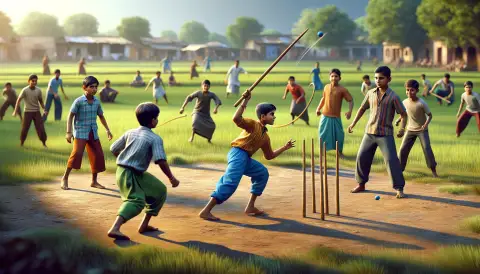
This is a traditional Indian street game, consists of two main components: the "gilli" and the "danda." The gilli is a small wooden stick or spindle, while the danda is a larger stick or bat. The game involves one player from the hitting team placing the gilli on the ground, and then striking it with the danda, aiming to hit it as far as possible. While the gilli is in the air, players from the opposing team try to catch it or retrieve it before it hits the ground. Points are scored based on the distance the gilli travels before being caught or retrieved. The team with the most points at the end of the game wins.
All players have to hop on one leg while holding their other leg up behind their back. The goal is to knock over the other players. If you fall, you are out. Last player standing wins.
The IT Game is a game where all participants put their non preferred hand on their head. Then, everyone has to run around in a specific area and get other people out by touching their elbows.
Located in 4 corners and in front of each cone, four groups with several participants at the signal of the "boss" will pull the rope to reach their cone. The first to achieve it wins. Make sure it is not a rope that cuts your hands. Or do have measurements like gloves, etc.
Tell everyone what they are supposed to draw. Turn the lights off so it is completely dark. After a few minutes, turn the lights on and judge who is the winner.
Needs two groups, each group lines in on the opposite side of the hall/room. Get each person to take off one shoe and make a pile of their team's shoes. Get each person from one team to come and select a random shoe from the other team's pile and then find the person to whom the shoe belongs. Once they have found their match, have a question ready for them. Get the other team to do the same.
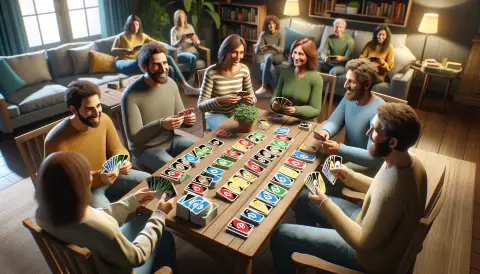
Players take turns playing cards from their hand that match the color or number of the card on top of the discard pile. The first player who gets rid of all their cards wins.
Create a bingo grid (4×4 or 5×5) where every square is a personal statement — "has more than five siblings," "has broken a bone," "speaks three languages." Give every player a sheet and a pen, then send them mingling to collect a different name for each square; each person can appear only once per sheet. Play to either finish line: first player to fill their whole grid wins, or, once the grids are full, the leader draws and calls names and the first player to strike out four in a row wins.
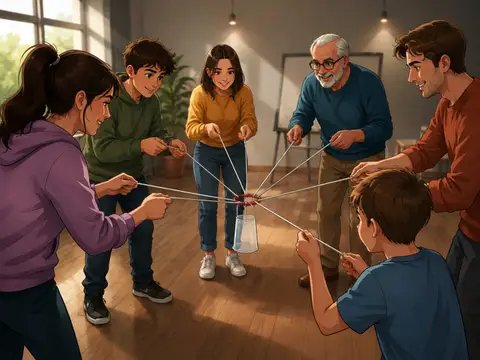
Make teams. Teams stand in a circle and join hands randomly with two different team members across the circle to form a giant knot. On "Go!", teams must unwind so that they are a circle again. Players are not allowed to let go of hands.
In this game, most players stand in a circle and mimic the changing actions of a predetermined leader while another player in the center attempts to guess who's in charge.
In "21 Football," teams take turns attempting to score points by completing passes from the quarterback to receivers in designated zones, each with different point values. Teams, divided into even-numbered groups, select a quarterback who throws from a designated zone and cannot leave that area. Players switch between being receivers and defenders, staying within their assigned zones during passes. Successfully completed passes earn points based on the zone's value, but defenders can intercept or deflect passes. Each round consists of four pass attempts, and after four passes, the roles switch, with the first team reaching 21 points winning the game.
Set boundaries. Throw a dodgeball in the middle and all players are on their own. If hit, a player must go outside the boundaries. If the player who hit them gets hit, they are back in the game. Only way to win is to eliminate all other players in the game.
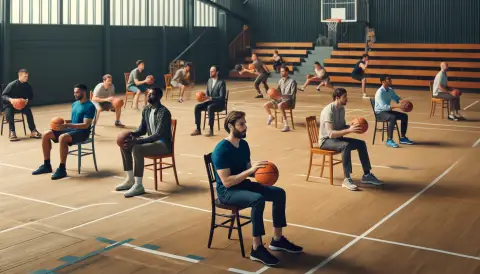
Make two teams. Everyone can place a chair somewhere on the basketball court and cannot move until the round is over. Play basketball, either into hoops or into a basket on the floor.
In the game "Psychiatrist," players are divided into two roles: "The Psychiatrist" and "The Patients." The game is played in rounds, with one player as the Psychiatrist and the rest as Patients. The assigned player leaves the room while the Game Leader instructs other players to display a unique symptom, such as pretending there's a smell in the room. The other players maintain the same symptom throughout the round. The assigned player returns, freely questioning the other players to diagnose the shared symptom. Patients must answer truthfully; intentional misleading is corrected by the Game Leader. The round ends when the assigned player accurately diagnoses or gives up. Another Psychiatrist is chosen for the next round, and the game continues until everyone has had a turn or time runs out.
A gift is wrapped and re-wrapped in layers of newsprint, foil, wax paper, plastic, paper, etc. All guests sit in a circle. Each one removes one layer of wrapping and passes the present on. The guest who removes the last wrap has to do a forfeit and then he gets to keep the gift.
Goal is to get 4 from the same team on the couch. There must be one less seat than there are people in the room. Divide into at least two teams and have everyone put their name in a hat. Everyone draws a name and that becomes their new name for the game. Everyone should keep their name a secret. The person to the left of the empty seat in the room calls out a name. The person who drew that name moves to the empty seat and switches names with the person who called out the name. Now the person to the left of the new empty seat calls a name. Continue. Try to call the right names to get your team on the couch.
Zip or Bong is a fast-paced, attention-focused game where players form a circle and pass the turn using the words "Zip" or "Bong." The direction of the turn is determined by the word used. Players must respond quickly to keep the game moving, with any hesitation or mistake leading to elimination. The game continues until one player remains.
The goal of this game is for guests to do the opposite of what they are told. When you say, "put your right foot out," they put their left foot out. When you say, "look up," they look down. However, if they do what you say, they will be out of the game. The last one left wins and is crowned the "little rebel!"
We're playing Crab Soccer! It follows soccer rules, but with players sitting on the ground, using both hands and feet to move. Teams defend their sides, freely entering the opponent's area. The ball starts in the center, and only one player defends each goal at a time. Multiple players near the goal without the ball receive a warning; further violations give the offensive team a point. Offensive players near the goal without the ball have restrictions. Each goal earns a point, and the first team to reach a set number (e.g., 10) wins. After a goal, players can stand up, return to their side, and sit down again.
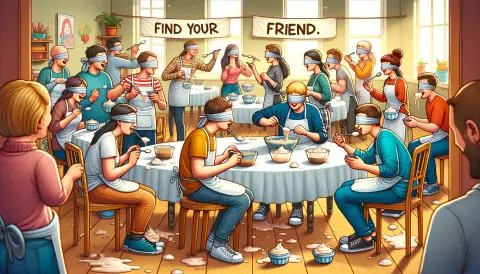
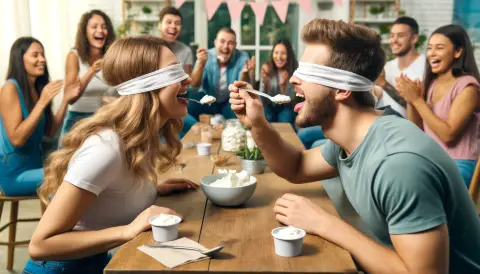
You'll need blindfolds, a spoon, some pudding (or other semi-gelatinous treat) and possibly some protective gear for this messy game. Have your group split into partners and instruct one partner to sit in a chair while the other stands up, blindfolded. Then instruct the blindfolded partner to attempt to spoon feed the partner the pudding. The seated partner can give direction but can't touch the blindfolded partner at any time. Whichever duo has the least pudding left in their cup after one minute wins.
Players gather in a circle, with one designated as "It." The game begins as "It" throws the ball in the air, calling out another player's name, prompting everyone to scatter. The newly designated player ("New It") takes possession of the ball, shouting "STOP." Holding the ball, the "New It" advances four steps toward a chosen "Target" without jumping. The objective is to hit the "Target" with the ball without skipping it or aiming for the head. The "Target" cannot jump, but can dodge or catch the ball with feet on the ground. If successful, the "Target" becomes "It." If the "New It" hits the "Target," they become the new "It," and the cycle repeats. The game continues until a final showdown between the last two players determines the winner.
Bad Bite is a hilarious and challenging team game that tests your agility, coordination, and teamwork. You split into two teams and use only your mouth to pick up and hold onto a large paper bag, reducing its size with each turn. With its simple setup and competitive spirit, Bad Bite guarantees laughter and fun for players of all ages.
All players stand in a large circle. One player is chosen as the detective. Detective leaves the circle as the rest of the players decide who their leader will be. All players in the circle begin to dance in the same way as the leader. Detective returns to the circle and stands in the middle. Leader will change their dance every so often and all players must copy him/her. Detective must identify who the leader is.
You'll need several hula hoops or pool floats for this fun challenge. Divide your players into partners and have them stand at least six feet apart. Each partner will try to "ring" the other with the hula hoop or float. Whichever pair has the most rings on each other at the end of one minute wins.
Scatterball is a fun, energetic game where everyone stands in a close circle, one player throws a ball in the air and calls a player's name. Everyone else scatters. The called player catches the ball and yells "Stop!" Everyone must stop moving or hiding. The player with the ball throws it to hit another player. If hit, that player must sit down. In future rounds, sitting players rejoin the game if they catch or grab the ball and hit another player with it.
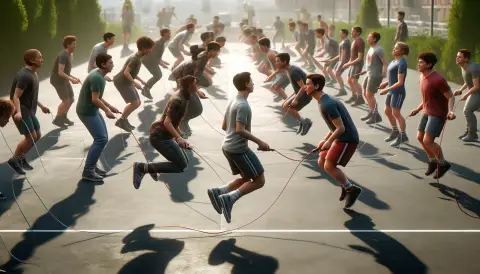
Divide into two teams and have team members line up single file. Give the first person in line a jump rope and instruct each team member to jump rope 10 times before handing the rope to the next person in line and heading to the back. Whichever team has the most members complete the task before the timer goes off wins.
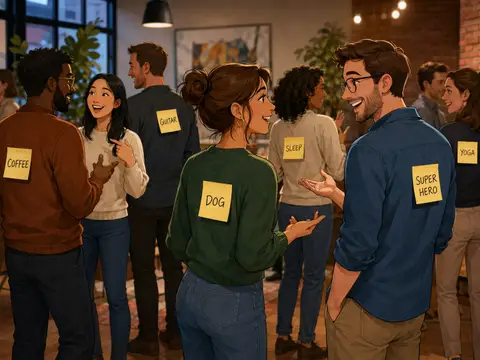
Each guest has a name of a person, animal or object taped to their forehead or back. Each person gets to ask 20 questions of various guests to figure out who he is.
Draw a large circle in the dirt and divide it into as many spaces as there are players. This is the Earth. Each player chooses a country name. Players take turns throwing a ball in the air and saying "I declare war on (country name)". The player with that country must grab the ball and yell "stop", while the other players run and hide themselves. Player who caught the ball can take three steps, then throw the ball to hit another player. If the player is hit, the thrower gets to take some of that player's land. Continue until one player has conquered the world.
All players walk/run around an area while music plays. Put a number of objects in that area that is one less than the number of players. When music stops, players attempt to secure an object for themselves. Each round, the player who does not get an object is out.
A ball game similar to cricket in concept where you have two teams, 'X' represents one team and the dots 'C' are the opposition. It can be played by an even number of players from four upwards, the more the merrier. The game consists of team X which gathers in a large circle where it is on the offensive. The defending team stands strategic position behind the score line F. Player A then rolls the ball towards team X. A player from X then comes out and kicks the ball as far as possible before the whole team runs towards the score line and back to the home base where they are safe. A player kicks the ball only once for each roll. One completed cycle will be worth 1 point. The defensive team then collect the ball and try to strike a player before he makes it back to the home base. Players can also be eliminated if they kick the ball in the air and the opposition catches it in the air, bounces it and shouts ''Hwishu''. If the player kicks the ball and it fails to go past the score line then he/she is eliminated. Once all have been eliminated the two teams then swap sides. The winners are determined by how many points they had before all the players were eliminated.
Wheel of Fortune is an entertaining game where contestants take turns spinning a wheel to determine a dollar amount, then guessing the letters in a blanked out phrase. Correct letter guesses are worth money (example: if phrase has 3 T's and the spin landed on $100, the contestant earns $300). Only the player who correctly guesses the entire phrase gets to keep their money from that round. Play several rounds to determine a winner. Roll a die to determine money value if a wheel is not available. To guess a vowel, contestants must "buy a vowel" for $250.
Players take turns counting up, starting with 1. Each player says either one or two numbers. If you say 10 then you are eliminated. Restart the count at 1. Continue until only one player is left.
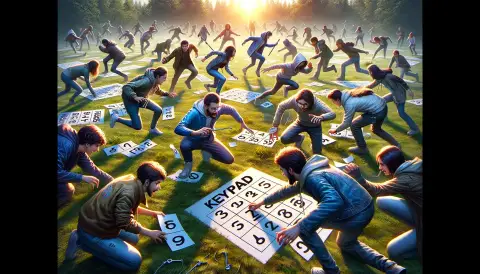
Place pieces of paper at random around the playing area. Each paper has a number on it, from 1 until 21 (or more). The goal is for teams to work together to touch each paper in numerical order as quickly as possible. Each person on the team is allowed to touch the numbers. The winner is the team that accomplishes this in the shortest time.
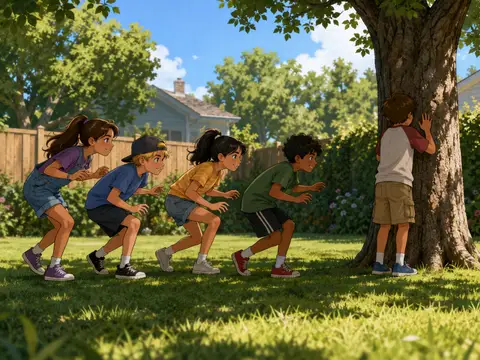
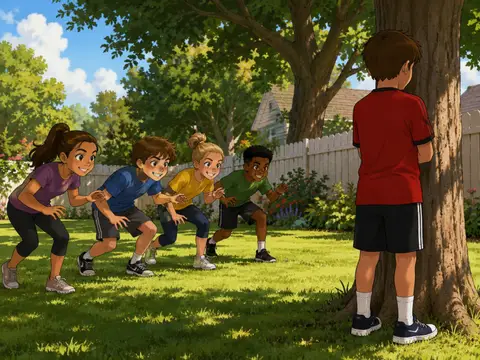
In this game, one player is chosen and stands with their back turned away from the group. Everyone else spreads out behind them as far away as possible and attempts to creep up slowly and tap chosen player on the shoulder. However, chosen player can turn around at any moment to look to see who is coming closer. No one can move while chosen player is looking. If the chosen player sees anyone moving, they can point at that person and they have to move to the side until the round is over. If anyone gets close enough to the chosen player to tap them on the shoulder, then the round is over and the person who tapped becomes the new chosen player.
The game host decides on a certain amount of time. Using a watch, they set a countdown for this time when they say "Go". Players cannot communicate with each other in any way. Each player must decide when they think the amount of time has passed and indicate by raising their hand. The closest to the actual time wins. (Alternative: Have the stopwatch beep when time is up. Last player to put up their hand before time runs out wins)
In this game small groups form an object like breakfast, a car, a washing machine, a fire, etc. They have only 60 seconds to work as a team to replicate the item. You can modify this game to be like group charades and have the opposite teams write down objects for the other teams to act out.
Player is given headphones that are playing music at a high volume. Player then must sing a song that is different from the one playing on their headphones.
Classic trivia game where players are asked a question one by one. The difference is that each correct answer means you get to knock one life off of any other player in the game. Each player starts with three lives and the last one standing wins.
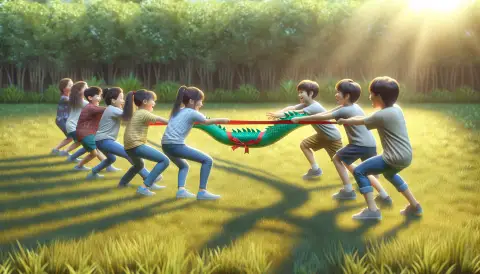
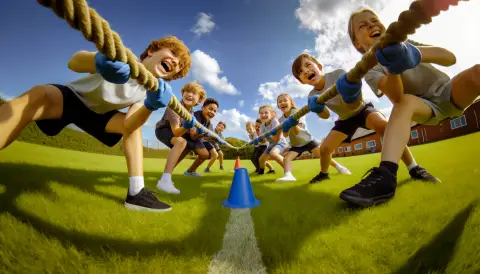
In the game of Tug of War, two teams compete by pulling on opposite ends of a rope. Each team tries to drag the other across a central line. The team that pulls the other team past this line wins the game. This outdoor game tests strength, teamwork, and strategy.
Pair players up and have them toss an egg back and forth to each other. Each time the children both catch it, they must take a step backward and continue. The team that can catch their egg with the furthest distance between them, wins!
Everyone stands in a circle. First player says "HI" and with joined palms waves from the top of the head down towards someone. That person then says "HA" and does the same movement but down to up. Person to left and right turn towards that person and say "HU", sweeping connected hands to the stomach of the middle person. Then it continues like that. If a person is not attentive and says or does something else that is incorrect, they are eliminated. The more people it is even more interesting. But if it exceeds a number of, for example, 20 in a round, several groups are made that play the same thing at the same time. When the number of people in the rounds decreases, small groups can join together until only one remains.
The game from Harry Potter except without broomsticks and flying. Have three small goals on each side with a keeper guarding them. Three "chasers" from each team play handball, trying to score on the goals. Two "beaters" from each team can throw a dodgeball at the Chasers. Chaser is temporarily out of the game if they are hit by a dodgeball. Position of seeker is optional - one possibility is for them to chase after a bouncy ball. Be creative and make it work!
Two Truths And A Lie, In each round of this game, participants will share two things about themselves that are true, as well as one thing that is not true. The job of the other participants is to try to guess which item is the untruth.
Participants are divided into groups, placed in rows and with their legs spread. The first in line throws the ball between the legs of the other teammates to the last one, who runs to the first place and does the same. The group that reaches a certain line first will get a point. Play to ten points. Variation: it can also be thrown over the head. The more people, the more groups will compete or the longer the lines will be through which the ball will pass.
Everyone knows how to play rock, paper, scissors, right? In this game, the Giants crush the Wizards, the Wizards attack the Elves and the Elves bite the ankles of the Giants and bring them down. The way to play is to line up opposite your opponent and together count "1-2-3-Go!" and on "Go", both of you represent the chosen character. Giants raise their hands above their heads to smash and roar. Wizards extend their hands as if shooting lightning and laugh like maniacs. Elves crouch on the ground while pretending to bite, claw and scream in a high-pitched voice.
Teams stand behind a line and take turns tossing something (such as bean bags) at a board, target, etc. A good variation to consider: have a board with different squares to land on, like Connect 4 or tic tac toe, instead of just having one bullseye.
One blindfolded guest is led to the middle of the circle of guests. When the host shouts, "GO!" the center player must reach out and grab someone from the circle, asking, "Who is it?" That guest answers in a disguised voice. If the center player can guess who it is, the discovered person becomes the blindfolded player in the middle.
Set up a relay race where participants must carry a balloon between their knees without using their hands. Once they reach the finish line, they pop the balloon and tag the next person in line.
Player is given an item and then has to try to "sell" the item infomercial style and keep talking for a set time limit. Would be funny to do guys vs girls (e.g., a guy is given a purse)
Two teams are given a challenge (carry a weight or something) and are on an oval course. On "go", they begin chasing each other around the track. First team to catch up to the other team wins.
Guests work in pairs, back-to-back. Each team is given a paper bag with household items/toys. One team member draws what the other is describing to them, but the name of the item and what it is used for cannot be spoken. If the partner draws/figures out what the item is, the team makes a point. The team with the most points wins.
Participants sit in a circle and pass an object (the "hot potato") around while music plays. When the music stops, the person holding the hot potato is out. Continue until only one person remains.
Multiple choice trivia questions. Mark each corner of the room with one of the answers. Players must run to the corner that has the answer they think is correct. Continue until all players are eliminated.
Mark a start and finish line. Call out a certain number of hands and feet. Teams get as many team members as possible from start to finish, though only the amount of hands and feet that was called out are allowed to touch the floor.
In one variant of the game, one person wears a blindfold while another player guides them to reach a goal, carefully avoiding obstacles along the way. Another exciting variant requires the blindfolded player to find certain objects arranged in different places and take them back to the starting point. For an added twist, you can line up multiple blindfolded players, each holding the shoulders of the person in front. The last player in the row, who does not wear a blindfold, guides the entire group through the course.
Multiple teams. Scatter letters all over a given area (can be written on paper, Scrabble pieces, etc.). On "go", players from each team race one at a time to collect letters within the time limit. Must retrieve a letter then bring it back and the next player runs. After the collecting time is up, teams must use their collected letters to form a word or words (depending on the game format). Most or longest word wins.
(From James Corden's show. Search Youtube for vids) Team vs Team challenge where blindfolded players have to face off and race to identify an item first by nuzzling it using only their faces. Examples from show include cotton candy, a turtle, football helmet, a snake, etc
Two players stand on a support, chair or pedestal. They are both holding a length of rope that is longer than the distance they are apart, so that there is slack. Players must try to pull the rope strategically to knock the other player off-balance so they fall.
The participants are divided into two teams and separate pieces of wood are placed on the attack line of each of the groups (as many as they wish). The first team to knock down all the wood wins a point. Players cannot face the wood.
Make a starting line and a finish line. Teams must move from the start to the finish and back. They are only allowed to stand on chairs, and cannot touch the floor. Teams are given one more chair than they have team members that they can use to move.
Rock Paper Scissors tournament with winner decided by best of 3 matches. Losers become cheerleaders for the players who beat them. They continue to follow them and cheer at all matches until the final winner is determined.
Start with a large collection of paired objects. Objects are arranged into a grid and covered with something (bucket, basket, etc.). Players take turns uncovering two items. If they match, player earns a point and player takes another turn. If not, player must cover up both items again. Player who makes the most matches wins.
Draw a line on the ground. Have one side as 'Yes' and the other side as 'No'. There must be a host. Have all participants line up on one side of the line. When the host says Yes or No, then the participants jump to the other side or back. Anyone who jumps to the wrong side is eliminated.
Give every player or team paper, a pen, and a theme — the funnier or more specific, the better ("an ode to the office microwave"). Set a ten-minute timer. When time is up, everyone reads their poem aloud to the group, and the leader or a round of applause decides the winner. For an extra twist, require three specific words to appear somewhere in every poem.
Start with a large, even grid of dots. Players take turns drawing a line from one dot to a horizontally or vertically adjacent dot. Count one point to players who complete a box when they draw their line. Player with most points once there are no moves remaining wins the game.
A match shall be played between two teams of not more than 11 players. Each team shall play under a captain, who shall toss a coin for the choice of first innings. The game is like hand ball, but 5 members from each team have to stand on top of the chairs and the other 6 members' target is to make sure that the ball reaches the other team members who are standing on the chairs; once they catch the ball they are released and now they can play along with others. The first team to release all their 5 players wins.
All players stand on a giant board of squares. Players move in turns, stepping from their square to another. They can only move vertically and horizontally. After players move, they flip over the square they were standing on after their turn and that square cannot be used anymore. Continue moving in turns. If a player cannot make any legal moves, they are out of the game. Continue until one player remains.
Pick a simple, repeating line dance and have someone who knows it stand at the front. Arrange the group in rows with space to move, and teach the routine a few steps at a time — walk it through slowly without music, then run it with the song. Repeat the sequence until the whole room can carry it. No experience needed: choose a dance with a short loop, keep the pace easy, and let confident dancers drift to the front so newcomers can follow.
Players start in a tight circle, and on a shared countdown everyone leaps backward into a frozen ninja pose. The game is turn-based: on your turn you make one swift movement — a single lunge or arm swing — to strike an opponent's hand, then freeze exactly where you end up. The player under attack may make one dodging movement, then must also freeze. If your hand is struck, that arm is out; lose both and you're eliminated. Play proceeds around the circle until one ninja remains.
Line up a bunch of candles in a row. Players take turns standing at a certain spot and trying to blow out as many candles as possible (or, they can move and it is timed how long it takes them to blow out the candles).
In the still feet game we will need a minimum of four people for this game. One of them should start in the center with a ball in hand. That person must kick the ball (as far as possible) shouting the name of a participant. In the period of time that the main person kicks the ball saying a name and that person looks for it, the rest of the participants run as far as possible. When the person who was named manages to reach the ball, she must shout "Steady feet!" and then everyone must stay still, in turn whoever has the ball will take three steps and throw it to someone. On the first hit he is injured, on the second serious and on the third he is dead and is eliminated.
Set a thick block of wood on a stable surface and start a nail for each player so it stands upright on its own. Players take turns, one swing per turn, trying to drive their nail flush into the wood in as few hits as possible — the lowest count wins. Miss the nail and the swing still counts. One player at the block at a time, everyone else stands clear, and a leader starts the nails for younger groups.
Get volunteers who are musical. They must sing a song when the host puts the microphone in front of them. Cannot sing the same song as before. The host will move the microphone quickly between players. Too much hesitation or singing the same song means the player is out.
There is one person (Chooser) who thinks of a word and reveals the first letter. Then one participant thinks of a word and tries to describe it in a way that the Chooser does not understand it. If another participant understands the word that is described he/she says CONTACT and then says the word aloud on the count of three. If they say the same word, the Chooser reveals another letter in the word. If not, the participants have to try again with another word. Once the Chooser has revealed the second letter, participants have to try to describe a word that has those two letters in it.
The "shoe from behind", among all those who want to play, a draw is drawn to determine who gets the shoe. One comes out and keeps the shoe and the rest, holding hands, form a circle on the floor while sitting. The one who has the shoe begins to go around the circle and sing this song (or another similar one): "To the shoe from behind, tris-tras. You don't see it nor will you see it, tris-tras. Look up, beans are falling. Look down, chickpeas are falling. Go to sleep, go to sleep, the Three Wise Men are coming!" When the song ends everyone must close their eyes and count to a number, ten for example. The person wearing the shoe must leave it in the back for someone. After a few seconds they open their eyes and check who left the shoe. The one who has it must grab it and run after the person who left the shoe to try to touch him with the shoe. If at 3 laps (or as many laps as agreed upon) he cannot catch it, he loses. Then he will be the one to start the game again.
The participants form a circle, each with brooms standing in reverse (the top of the stick placed on the ground). The participants must move to the next place by releasing their broom and running to the broom that the participant next to them has just released. He who drops his broom loses, and the circle shrinks. When the number of people in the circle is less than 5, they should stand further away than normal so they should run more and be faster. This accompanied by music.
Each person writes 2-3 facts about themselves on a regular sheet of white paper. Everyone crumples the paper into "snowballs" and has a snowball fight for 30-60 seconds while music plays. When the music stops, everyone grabs the "snowball" closest to them, opens it up and uses the facts to try to find the person who wrote it. Prizes for first 5-10 who find their person.
Everyone starts standing up. Read through a list of awkward situations that could happen to anyone. Participants sit down if they have not experienced this. The last one standing is the lucky winner (and the most awkward as well).
The members hold hands and spin as fast as possible counting: 10, 20, 30, 40, until they reach 100. When they let go, each of the people has to reach a base that is located in different areas of the space where they play (it is important that each base has a good distance from the others, NOT TOGETHER). There is always one base less than the number of people (for example, if 5 people are playing there must be 4 bases). The remaining one (without base) remains in the center. The game consists of those on the bases having to exchange them in pairs and whoever is in the center taking advantage of the opportunity to take over a base. Whoever loses the base remains in the center and the situation repeats itself. When one of the people loses their base 3 times, they are eliminated.
String a net (or rope, fabric, etc) across 2 chairs to make a net. Mark boundaries with painters tape. Same rules as volleyball but everyone has to sit cross legged on the ground at all times.
Have a list of random but relatively normal items for people to find in the audience. Two teams compete against each other to see who can return to the stage with the item the fastest. (e.g. $100 bill, Samsung phone, pink sock, someone over 65 etc.).
One person has to be the "boss" and stand in the middle with a handkerchief. The rest are divided into two teams and each one is assigned a number, so that said number is repeated in both groups. Next, the two groups stand at the same distance from the leader but in opposite places. The boss will say a number out loud and the two people with the same number, but team rivals, must run to pick up the handkerchief. Whoever takes it returns to his place, while the other person is eliminated. The first team to run out of players will lose. The more people there are, the more it spreads too.
Give each player or team an equal pile of clothespins. On "Go!", players clip as many as they can onto their own face — chin, cheeks, ears, nose — within the time limit (60 seconds is plenty). Pins must stay attached to count. The player or team with the most pins still hanging on when time is called wins. Painful, ridiculous, and a guaranteed photo opportunity.
Set up a few targets — buckets, hoops on the ground, or chalk circles — at different distances, each worth different points. Instead of balls, players throw random objects the leader hands them: a boot, a stuffed animal, a sponge, a paper plate. Each player gets the same objects in the same order, and the highest total score wins. The mismatched throwing physics is the whole game — a paper plate never flies where you aim it.
The aim of the game is for a team to capture the opposition's flag. A team achieves this by finding the flag and bringing it back to their home base safely. When a player is in their defensive half, they can tag a player from the opposition team. The tagged player must walk back to their team's home base before being "in play" again. If a player is carrying the flag, the opposition team can tag them in either half. Once tagged, the opposition team must return the flag to their base straight away. The tagged player must walk back to their team's base before being back "in play" as per normal. Points decide the winner.
Let's Play Spider Soccer! Soccer, except everyone is crawling like spiders or crabs on their hands and feet. Players skitter across the field, using both hands and feet to propel themselves forward. They dribble the ball with quick, scuttling movements, and pass it with a flick of their wrists or a deft kick from an awkward angle. The goalkeepers crouch low, ready to pounce like predatory arachnids. Spectators cheer as goals are scored in this bizarre, yet fascinating version of the game.
Two people put an elastic band between their ankles, leaving a space between them. The rest jump on and off the elastic, following one of the numerous variations and songs that accompany the jumps. Not only do you jump in and out, but you also cross your legs with the elastic band in different exercises. To increase the difficulty, the height of the elastic is progressively raised. The bigger the elastic, the more people can participate.
Split into two teams and line them up facing each other, well apart, with a chair at each end and a mop head placed in the middle between them. Scatter hockey sticks in the corners opposite each team, and number the players on both teams so each player has a rival with the same number. When the leader calls a number, both players dash for a stick, then battle to sweep the mop head back to their own team's chair to score. Call two or three numbers at once when the game needs more chaos.
Divide into two teams. Both teams divide again into two lines and then sit with their feet touching one another. Number each pair. When a number is called, those two must run around their team's "caterpillar", over all the legs of their team members, and back to their original spot. The team back first is the winner.
Players take turns throwing a hatchet at a wooden target, scoring points for how close to the bull's-eye it sticks. Run it in rounds — three throws per turn — and total the scores, individually or as teams. This one is adults (or older teens with instruction) only, and safety is non-negotiable: a proper target with a clear backstop, one thrower at a time, everyone else well behind a marked line, and a sober, briefed group. A commercial axe-throwing venue handles all of this for you and makes a great team outing.
Mark a tic-tac-toe grid on the floor with tape and split into two teams — one is X, the other O — each armed with three markers of their own (plastic cups and paper plates work well). Relay-style, one player from each team races out and places one marker, then runs back to tag the next runner. Once all three markers are down, runners move one of their existing markers per turn instead. First team to get three in a row scores the point; reset the grid and race again to a target score.
Each player on a team gets a letter around their neck or on a printed t-shirt. The group needs to arrange themselves to make as many words as possible. Add difficulties or obstacles, such as having the whole team on a plank of wood and they lose points if a team member falls off.
The players line up behind a glass. One by one they have to fill the glass little by little and prevent the water from overflowing and the player who overflows the water loses.
Multiple-choice trivia game where each player is standing on the first in their own line of squares. For each correct answer, players can take one step forward onto the next square. There are eight squares total in each row, two in each of four colors. Last player left on each color is eliminated. First one to the end wins.
Split into teams and call out a word — "rain," "love," "fire." Teams take turns singing a real song lyric that contains the word, going back and forth until a team repeats a song, sings a lyric without the word, or stalls past a ten-second countdown. That team drops out of the round, and the survivors get a new word. No instruments needed, and off-key counts — the game rewards memory and nerve, not talent.
Hide a set of objects around your playing area before the group arrives — the more varied the hiding spots, the better. Give teams a list of what's hidden (or riddle-style clues for a harder hunt) and set a time limit. Teams race to find as many items as they can before time runs out; the most items found wins. Assign point values to the hardest-to-find objects to keep every team hunting until the final minute.
Place a water bottle somewhere a short distance away from a water source. Teams must fill up the water bottle using any means available (spoons, their hands, etc.)
Prepare 5 to 10 plastic cups and place them in a row on the table. The player will then be given an uninflated balloon. Your task is to inflate the balloon INSIDE the plastic cup so that it inflates enough to lift the cup. Therefore, they will take turns using balloons to stack plastic cups into a stack. Whoever gets the stack in the shortest time will be the winner. Or to make it a little more difficult you can stack the glasses in the shape of a pyramid.
"Blindfolded Obstacle Course" is a thrilling team-based game where participants navigate a traditional obstacle course, but with a twist: one member of each team is blindfolded. This game emphasizes teamwork, trust, and communication as players guide their blindfolded teammate through the course.
All sit in a circle facing the center. One person in the middle says for example: "everyone with glasses". Then everyone with glasses gets up, changes seats and the one in the middle sits down. Those who are sitting can move to the seat on the right to prevent those who are standing from sitting down. The one who can't find a seat says something again and the game continues. If the one in the middle says "fruit salad" EVERYONE has to change seats.
The host chooses a word, writes it on paper and gives it to the participants. The twist is, one participant will get a paper that says imposter. Now, the host chooses one player to start drawing. Each participant draws one line at a time, but must try not to make it so obvious. The imposter needs to pretend to know what he/she is drawing. Everyone draws twice (two turns) and then the group gets to vote who they think the imposter is. If the imposter tricks the other participants, he/she wins the game.
Divide into teams. All players have a flag tucked into their pocket. They are captured when that flag is taken, regardless of where in the area of play they are. Players must return to their base and get a new flag if theirs is stolen. Stolen flags can be returned to a player's own base for points, or can be held on to at the risk that another player will steal them. Capturing the flag is worth a certain amount of points. Winner is decided on points.
Place an object — a flag, a beanbag, a hat — on top of a tall pole or hang it well out of reach. Each team must work out how to retrieve it using only themselves and whatever materials you allow. Most teams end up engineering a human lift, so set the rules up front: how many spotters, what can be stacked or climbed, and what's off limits. First team to retrieve their object safely wins. Keep the height reasonable and always require spotters for any lifting.
The contestant or team with the highest total at the end of Final Jeopardy is declared the winner. The game is known for its unique answer-and-question format, where the host presents the clues, and contestants respond by framing their answers in the form of a question. The game combines knowledge, strategy, and quick thinking, making it a beloved and enduring quiz show.
Call up two people who are close friends. Give each a picture of themselves and their teammate. Ask questions like "who is more likely to...". Teams get points when they answer the same.
A variation on balloon stomp. Divide into two teams. Tape balloons decorated to look like chickens to players' ankles. One "catcher" from each team must grab the balloons from the other players.
Blindfold a person and have them stand on a chair. Tell them they are going to jump off the chair when it is held high in the air. Two people on the side lift the chair slightly off the ground. The host asks the player on the chair to touch them on the shoulder, then the host ducks so the person thinks they are very high in the air. They then jump and land way sooner than they expect. It's quite funny.
Get lots of paper plates. Mark one side with an X. Divide the group into two teams. One team must flip plates over to show the X, the other team must flip to hide the X. Winning team is the one with the most plates flipped to their side after the time limit is up.
Arrange players into a line, with all players looking away from the stage so they can't see what is happening. Whisper an action to the first player in line. They act this out for only the second person. The second person then acts out what they saw for the third, etc. The last person has to guess what the action was.
Regular soccer rules, wildly irregular field: play in a forest, on a slope, or anywhere full of natural obstacles. Mark two goals a good distance apart — a gap between two trees works — and let the terrain do the rest. Trees become defenders, roots redirect passes, and the ball is never where you expect it. Keep teams small so everyone stays involved, agree on boundaries before kickoff, and walk the area first to clear anything genuinely dangerous.
The player who is "it" faces away from everyone else. When they say "Green Light", all other players can run towards them. When the player who is "it" says "Red Light" and turns, players must stop. If the player who is "it" catches anyone moving when they turn, those players must go back to the starting line.
Set up targets — cans on a fence rail, buckets, or chalk circles on a wall — and mark a shooting line. Players take turns firing soft or light ammunition (pom-poms, foam balls, or dried beans) from a slingshot, scoring points per target knocked down or hit. Highest score after a set number of rounds wins. Run it like a range: one shooter at a time, everyone else behind the line, and nobody downrange of the targets, ever.
Play music. When it stops, everyone sits. If you don't have a chair you are out. Variations: Players need to go under the chair, arrange the chairs into a different pattern, etc.
One member of the team removes their blindfold and directs their blindfolded teammates to perform various tasks. These tasks can include arranging themselves into a specific order or forming a particular shape on the ground using a piece of string.
Teams must use what they have available (sticks, string, etc.) to build something they can use to reach objects hanging at a distance. They are not allowed to cross a certain line. One point for every object the team collects.
Slappers, Best played at night. One player is "it". They cover their eyes and count down from 15. All players have to "slap" them and then hide. The player uncovers their eyes and can take three steps. If they can't find anyone, they cover their eyes and start counting down from 14. All players must run out of their hiding places, "slap" the player who is it, then hide again. Every time, the player who is "it" counts down from a smaller number. Continue until everyone is out. WARNING: PEOPLE OFTEN GET HURT BY RUNNING INTO EACH OTHER IN THIS GAME.
Teams must get from Point A to Point B without touching the ground. Variations include having the team walk on chairs (1 extra chair for the team to use when moving), using planks of wood, etc.
Players make paper airplanes. The airplane that flies the farthest or most accurately wins. Best if airplanes can be thrown off a second story balcony or level.
Have a bucket up on top of a ladder a short distance away from a water source. Teams must run back and forth to fill up the bucket as quickly as possible.
In an open space, a large group moves around. The game leader shouts out a number, and everyone must quickly form groups of that size. Anyone who can't find a group gets eliminated. The game continues until only a few players remain.
Teams need to arrange themselves in a specific order (age, birthday, etc.). Throw in an extra complication (they are standing on chairs and can't touch the ground, they are blindfolded, etc.)
Players sit in a circle. One player is "it". They walk around the circle patting people on the head saying "Duck". When they say "Goose", they race the player who was tagged around the circle. Players run opposite directions. Last one back to the spot is "it" for next round. (Variation: Try with multiple people who are "it")
Players shoot a set number of arrows at a target, scoring by ring, highest total wins. Run it in small flights with a clear rotation: shoot, wait for the all-clear, then collect arrows together. This game needs real supervision — an instructed adult running the line, one shooter per target lane, and everyone else behind the shooting line until arrows are called. A local range or camp archery setup provides the equipment and the safety briefing for you.
Buy a random collection of items (toothpaste, batteries, etc.). Have contestants guess the price. Closest correct guess that is under the actual amount wins. Guesses that are over the correct amount cannot win.
Players must hold two 2L bottles full of water outstretched and not let their arm fall. A judge can determine if the player is not holding the bottles high enough.
Team trivia game where getting a wrong answer results in increasingly difficult "punishments" (start with 5 push ups, then 10, then running to somewhere and back, etc.)
Pea Pipes, Simple relay structure for this game. 4 teams line up at one end. Place a bowl of peas (or whatever you are using) at the other end. The first player from each team has to run to the other end and pick up a pea by sucking it on the end of the straw. Then they must carry it back to their team. If the pea falls off while they are returning, they must pick it up again (with the straw) and continue back. To win, a team must get all of its players to bring back 1 pea each.
Get everyone to huddle in a group in the middle of the room and join each hand with someone across the circle. Once everyone has joined hands, let them know their task is now to untangle themselves. To make the game interesting, make sure there are some chaotic hand joins going on - get players to weave their hands up and over other arms. This ice breaker game can work really well as a team competition - split the group into a few different even-sized teams and get each group to tangle themselves then make it a race to get completely untangled. It might help to have a leader watching each team so there is no cheating going on!
A combination of OC and Risk, teams compete at stations to win "armies" which can be used to conquer the various regions of Israel. The regions have different values, Golan having the greatest value (number of points). The goal is to have the most points at the end of the game by conquering the regions (and thereby defeating other teams). All stations must be completed once before the team can repeat a station in order to get more armies. Headquarters closes at a set time, after which it is impossible to bring more armies to the war. Strategy: Can only turn in 3 armies at a time.
Tie a doughnut to a string for each player and hang the strings from a pole, doorway, or tree branch at mouth height. Hands behind their backs, players race to eat their entire doughnut — including the last bite that always swings away at the worst moment. First clean string wins. Sugared doughnuts raise the stakes and the mess; have someone hold the pole steady and keep cameras ready.
Tie balloons around players' ankles by string. Players must pop other players' balloons by stepping on them. A player is out once their balloon is popped.
Teams compete at stations to win "gold coins". They can "sell" these to the bank. Police walk around the area and can take gold coins from teams if they touch one team member. Teams can also sell gold coins to goldsmiths who are walking around for less money than they would get from the bank, but some of these are undercover police. Teams can use money to buy weapons, which can be used to challenge other teams to steal their gold coins.
Mark out a large rectangular field. One or two players start as sharks in the middle, everyone else lines up as minnows on one end line. When the sharks shout "Fishy fishy, cross my ocean!" all minnows must run to the opposite end line without being tagged. Anyone tagged becomes a shark for the next crossing. The last free minnow wins and starts as the shark in the next game.
One or two players are bulldogs standing in the middle of the play area, and the rest line up on one side. On the call of "Bulldog!" everyone charges to the other side while the bulldogs try to catch them. In the classic version a caught player must be held long enough to shout "British Bulldog, one two three"; for a gentler game use two-hand touch instead. Caught players join the bulldogs. The last runner standing wins. Set clear no-tackling rules and play on soft ground.
Two teams form lines facing each other about 30 feet apart, holding hands firmly. One team calls "Red Rover, Red Rover, send [name] right over!" The named player runs and tries to break through the linked hands of the opposing line. If they break through, they take one opponent back to their team; if not, they join the opposing line. Teams alternate calls until one team has absorbed everyone. Ask players to link at the hands and wrists only, and keep the running distance short to stay safe.
Place an empty can in the middle of an open area. One player is "it" and guards the can while everyone else hides. When "it" spots a hider, they call the hider's name and race them back to the can — if "it" touches the can first, the hider goes to jail near the can. Any free player who sneaks in and kicks the can before being caught frees all the jailed players. The round ends when everyone is captured, and the first person caught becomes "it" next round.
A classic dusk game. One player is the ghost and hides while everyone else counts at home base: "One o'clock, two o'clock… midnight!" The group then wanders the play area searching. Whoever spots the ghost yells "Ghost in the graveyard!" and everyone sprints back to base while the ghost tries to tag someone. Anyone tagged becomes a ghost too, and the searchers head out again. The last player never tagged becomes the first ghost of the next game.
Hide and seek in reverse scale: one or two hunters, everyone else hides across a large agreed area. Hunters count to fifty at base, then search. Tagged players either join the hunters (classic) or go to a jail where teammates can free them with a tag (extended version). Set firm boundaries, a time limit, and a signal to call everyone in. The last player to remain free wins. Works brilliantly in the dark with glow sticks marking the base.
Played after dark. One player holds a flashlight and counts at base while everyone hides. Instead of tagging by touch, the seeker "tags" a player by catching them in the flashlight beam and calling their name. Named players return to base and wait. If the seeker calls the wrong name, the hider may relocate. Rotate the seeker each round so everyone gets a turn with the light. Agree on the play area in daylight first, and remove trip hazards before you start.
The classic swimming pool chase. The player who is "it" closes their eyes and calls "Marco!"; all other players in the pool must immediately answer "Polo!" Using sound alone, "it" swims toward the voices and tries to tag someone, who then becomes the new "it". If "it" suspects a player has climbed out of the water, they can call "Fish out of water!" — if correct, that player is automatically "it". Always play with a lifeguard or adult supervising.
The game every group already half knows. One player is the seeker and counts to an agreed number at home base with eyes closed while everyone else hides within the agreed boundaries. The seeker then searches; hiders can either stay put until found or race to touch home base before the seeker calls their name at base. First player found (or last to reach base, in the racing version) seeks next round. For big groups, use two seekers and a larger area.
A no-contact tag variant for sunny days. Instead of touching other players, the person who is "it" tags someone by stepping on their shadow and calling their name. Because nobody is grabbed or pushed, this version is perfect for mixed ages and small spaces. Play in an open area in the morning or late afternoon when shadows are long. Whoever is tagged becomes the new "it". For extra chaos, make everyone who is tagged also "it" until one shadow remains free.
Everyone is "it" at the same time. When you get tagged, you must place a hand — a "band-aid" — on the spot where you were touched, and keep playing. The second tag adds your second hand as another band-aid. On the third tag you are "injured" and must kneel; you are healed and rejoin the game when two free players tag you together and shout "Doctor!" Play continues until the group is exhausted or one untouched champion remains.
The fastest tag game there is: on "Go!", every single player is "it". Tag anyone; anyone can tag you. When you are tagged, you sit down where you are. If two players tag each other at the same time, both sit. Seated players can still tag anyone who runs within arm's reach, so the field becomes a minefield. Last player standing wins. Rounds take a couple of minutes, so play best-of-five. A perfect energy burner before a longer activity.
One player is Mr. Wolf and stands with their back to the group, who wait on a start line. The group chants "What time is it, Mr. Wolf?" and the wolf answers a time — "Three o'clock!" — so everyone takes three steps forward. When the group gets close, the wolf may answer "Dinner time!" and spin around to chase them back to the start line. Anyone caught becomes the new wolf. Sneaky wolves keep the group guessing about when dinner time will come.
One player is "Mother" and stands at one end; everyone else lines up far away. Players take turns asking, "Mother, may I take three giant steps?" — or baby steps, bunny hops, twirls, anything. Mother answers "Yes, you may" or "No, but you may…" with a different move instead. Anyone who moves without asking or forgets to say "Mother, may I?" goes back to the start. First player to touch Mother wins and takes over the role.
Choose one leader; everyone else lines up behind them. Whatever the leader does — climbing over a bench, hopping on one foot, waving at strangers, army-crawling under a table — the whole line must copy in sequence. Anyone who refuses or fails a move drops out (or, in the friendly version, moves to the back of the line). Swap leaders every couple of minutes so everyone gets a turn to invent ridiculous moves. Great as a warm-up or as a way to move a group between locations.
Divide into teams of at least two. The first player crouches down tucked into a ball; the second player places hands on their back and leaps over, then immediately crouches ahead of them. The player behind leaps over everyone in front, crouching at the front each time, so the team leapfrogs its way down the course. First team to get all members across the finish line wins. Keep the crouch low and hands flat on backs to make the vaults easy and safe.
Draw the classic numbered court (1 to 10) with chalk. The first player tosses a marker — a flat stone or beanbag — onto square 1, then hops through the court skipping the marker's square: single squares on one foot, side-by-side squares with one foot in each. At the end, turn and hop back, pausing to pick up the marker on the way. Complete the run without stepping on lines or losing balance, then throw for square 2. First player to finish all squares wins.
Two turners swing two long ropes in opposite directions like an eggbeater while jumpers time their entry and skip inside. Start by teaching the rhythm: jumpers rock on the spot and enter as the near rope passes their face. Once a group can keep a jumper going, add challenges — counting contests, two jumpers at once, tricks like turns and floor touches, or rhymes the whole group chants. Rotate turners regularly; good turning is half the skill.
Players form a circle around one person holding a long rope (or a rope with a soft beanbag tied to the end). The center player spins, sweeping the rope around the circle at ankle height like a helicopter blade, while everyone jumps over it as it passes. If the rope touches your feet, you're out — or you take over as the spinner. As the round goes on, the spinner can raise the height slightly or speed up. Last jumper standing wins.
Split the group into two teams: cops and robbers. Mark a jail area. The robbers scatter and hide across the play area; the cops hunt them down and escort anyone tagged to jail. Jailed robbers can be freed if a teammate sneaks in and tags them without being caught — freed players get a free walk back into play. The cops win when every robber is locked up at the same time; then teams swap roles. Add a time limit for large areas.
Ordinary tag with a pop-culture safety valve. When the chaser closes in, a runner can drop to one knee and shout the name of a TV show to become safe — but no show can ever be repeated by anyone for the whole game. Hesitate too long or repeat a title and the tag counts. Whoever is tagged becomes the new chaser. Swap the category to films, songs, or animals to fit your group, and watch the easy answers run out fast.
One player is the spotter and stands on a fixed base. Everyone else hides — but with a twist: every hider must be able to see the spotter at all times. The spotter, without leaving base, scans and calls out anyone they can identify. After a minute the spotter closes their eyes and counts to ten, and all surviving hiders must move closer to base before hiding again. Rounds continue with shorter counts until someone is close enough to sneak in and tag the base. That player spots next.
The group forms a tight safety circle. Inside it, one blindfolded player is the bat and two or three players are moths. The bat hunts by echolocation: every time the bat calls "Bat!", all moths must instantly answer "Moth!", and the bat homes in on the sound. The circle gently redirects anyone about to walk out of bounds. When a moth is tagged, they join the circle and a new bat or moth rotates in. A brilliant quiet-but-tense game that also sneaks in a science lesson.
A trail-chase across a big outdoor area. One small team — the foxes — gets a five-minute head start and must lay a visible trail as they go: chalk arrows, flour dashes, or clothes-peg markers every twenty paces. The hounds then track them. The foxes may use tricks like false trails and loops, but must keep marking honestly. The foxes win by reaching an agreed finish point before being caught; the hounds win by tagging them first. Agree boundaries and a return time before starting.
The hot-weather version of Duck, Duck, Goose. Everyone sits in a circle. The player who is "it" walks around the outside with a cup of water, dripping a small splash on each head while saying "Drip… drip…" — until they dump the whole cup on someone and yell "Drop!" The soaked player leaps up and chases "it" around the circle, trying to tag them before they steal the empty seat. Refill, rotate, repeat until everyone is cooled off.
All you need is a wall and a bouncy ball. Players take turns throwing the ball against the wall; it must bounce once on the ground before the next player catches or returns it. If you fumble the ball, touch it without controlling it, or miss the wall, you must sprint and touch the wall before another player hits it with the ball — get beaten and you earn a letter. Spell out a word (or collect three letters) and you're out. Last player standing wins.
One thrower faces a spread-out group of catchers and launches the ball high while calling a value: "200!" Whoever catches it cleanly earns those points; drop it and you lose the same amount. Mix it up with calls like "Dead or alive, 300" (catch on the full or after one bounce) or "Jackpot, 500." First catcher to reach exactly 500 points becomes the new thrower. Works with a football, frisbee, or tennis ball, and scales from a backyard trio to a whole camp field.
Two or more players pass a ball to each other while the "monkey" in the middle tries to intercept it. If the monkey touches the ball — in the air or on a bounce — the player who threw it becomes the new monkey. Keep throws honest: no holding the ball for more than a few seconds and no throwing far over the monkey's head. With larger groups, use two monkeys and two balls at once for a much sweatier version.
A head-height frame of nine open squares (built from PVC pipe or a bought kit) turns four square into a volleyball-style battle. Each player defends the square above their head, hitting the ball up and out of their own square into someone else's. Let the ball drop in your square or hit it out of bounds and you're out — everyone rotates toward the center square, and a waiting player steps in at square nine. The player who holds the center longest is the champion.
Volleyball for groups that can't rally yet. Two teams face off across a net or rope, but instead of striking the ball, players catch it and immediately throw it back over. A point goes to the other team when the ball hits the floor on your side, is thrown out of bounds, or is dropped. Rotate server positions like volleyball. It's the perfect bridge game for mixed ages — young kids can genuinely compete with adults — and you can tighten rules (three-second holds, three passes max) as skills grow.
Stretch a rope or line of chairs across the room as a net and swap the volleyball for a balloon. The balloon's slow float gives everyone time to react, which makes long, dramatic rallies possible for any age or ability. Play to volleyball rules: up to three touches per side, no catching, point when the balloon lands. For chaos mode, add a second or third balloon in play at once. Works brilliantly indoors where a real ball would break something.
Each team holds the edges of a large blanket or tarp stretched flat. A ball sits in the middle of the serving team's blanket; on "three!", the whole team snaps the blanket to catapult the ball over the net, and the receiving team must catch it in their blanket. A point is scored when the other team lets the ball hit the ground or fails to launch it over. It's pure coordinated teamwork — the game is decided by which team learns to snap in perfect sync.
Each team defends a court half, with one teammate — the catcher — standing on a bench at the far end behind the opposing team. Players throw the ball over the opposing team, trying to reach their catcher's hands on the full. Every clean catch lets the thrower join their catcher on the bench, making the next catch easier. Defenders may intercept but not enter the bench zone. First team to get its whole side up on the bench wins the round.
The classroom-taming classic. Players spread out (standing or sitting on desks) and toss a soft ball to each other in total silence. You're out if you talk, laugh, drop a catchable throw, or make a genuinely bad throw — as judged by the referee. Eliminated players sit down but stay in the room, watching for anyone who breaks the silence. Play continues until two silent champions remain. Great for cooling down an over-excited group without losing the fun.
Kickball's big-gym cousin, beloved in schools. Bases are large gym mats, and any number of runners can stand on a base at the same time — so a whole team can pile up on second waiting for a big kick. Runners must circle the bases twice to score, doubling the drama. The fielding team gets kickers out by catching flies or hitting runners below the shoulders with the ball between mats. Three outs (or a full rotation of kickers) swaps the sides.
Two teams advance a flying disc up the field purely by passing — the player holding the disc cannot run, only pivot, while teammates cut into space. Score by catching the disc in the end zone. Any dropped, intercepted, or out-of-bounds pass is an instant turnover. Ultimate is famously self-refereed: players call their own fouls and resolve disputes on the field, which makes "spirit of the game" part of the sport itself. A large lawn and a $10 disc is all a group needs.
Golf, but throwing a frisbee. Play an official course with chain baskets, or invent your own: pick a target — a tree, a bin, a post — and count how many throws each player needs to hit it. Each new throw starts where the disc landed. Lowest total across nine "holes" wins. Designing the course is half the fun: send throws around buildings, over streams, or under branches. A single disc per player and a park is all it takes.
One player throws the small target ball — the pallino — down the lawn. Teams then take turns rolling their larger bocce balls as close to the pallino as possible, knocking rivals away when useful. When all balls are thrown, the team with the closest ball scores a point for every ball nearer than the opponents' best. First team to 12 points wins. Slow enough for conversation, tactical enough to get competitive — the perfect barbecue game for mixed generations.
Plant two stakes about 30 feet apart (closer for casual play). Players take turns pitching two horseshoes at the far stake. A ringer — the shoe wrapping the stake — scores three points; the closest shoe within a hand's width of the stake scores one. Only one player scores per round: cancel out matching throws, then count the difference. First to 21 wins. Use rubber horseshoe sets for indoor or family play. Keep bystanders well behind the pitcher.
A ball hangs from a rope attached to the top of a tall pole. Two players stand on opposite sides and strike the ball in opposite directions; you win by winding the rope completely around the pole in your direction. You may not catch or hold the ball, touch the rope, or step into your opponent's half. Fast, fair, and endlessly repeatable — winner stays on while the next challenger rotates in, which keeps a whole line of players engaged.
The classic basketball shot-copying duel. The first player calls and attempts any shot — behind the back, eyes closed, from the bench. If it drops, every other player must copy the exact shot; anyone who misses collects a letter, starting with H. If the leader misses, the next player invents a shot instead. Collect all five letters of HORSE and you're out. Play PIG for a faster game. No defense, no running — just creativity and nerves, which makes it work for wildly mixed skill levels.
Players form a line at the free-throw line with two basketballs at the front. The first two players shoot; each one's mission is simply to score before the person behind them does. If the player behind you scores first, you're knocked out. After any make, pass the ball back to the next in line and rejoin the line. Rebounds can be put back from anywhere. The line shrinks with every elimination until a final one-on-one shootout decides the champion.
Mark five to nine shooting spots in an arc around the key, from one baseline to the other. Players must sink a shot from each spot in order to travel "around the world." Make it and advance; miss and you choose — stay put and end your turn safely, or "chance it" with a second attempt, where a miss sends you all the way back to the start. First player to complete the full arc (and back, in the long version) wins.
Tape a large donkey poster to the wall. Each player in turn is blindfolded, gently spun three times, then pointed toward the wall to pin (or tape) their numbered tail where they believe the donkey's rear should be. No feeling around the poster edges allowed! Once everyone has placed a tail, remove the blindfolds and measure — the tail closest to the right spot wins. Swap the donkey for anything matching your party theme: a rocket, a unicorn, the birthday kid's photo.
Hang a candy-filled piñata from a branch or beam with room all around. Players take turns — blindfolded and spun for the classic version — swinging a stick to crack it open while a helper raises and lowers the rope to keep things sporting. Everyone else stands well back behind a marked line until the piñata bursts, then swarms in for the scattered treats. Give each player a fixed number of swings so the smallest guests get a fair turn before the piñata gives way.
Fill a large tub with clean water and float a dozen apples. With hands clasped behind their backs, players take turns trying to grab an apple using only their teeth — far harder than it looks, since apples spin and dive when nudged. Play for fastest single grab, most apples in one minute, or head-to-head races at the same tub. Have towels ready and change the water between groups. A must at autumn and Halloween events.
Teams of two or three get two rolls of toilet paper and three minutes. One teammate stands as the mummy while the others wrap them head to toe — face uncovered — as completely and neatly as possible before time runs out. Judge on full coverage, costume quality, and dramatic mummy pose; broken paper strips count against you. Then swap roles and wrap the next victim. Cheap, hilarious, and the group photo afterwards is guaranteed gold.
Teams line up shoulder to shoulder. The first player tucks an orange under their chin, and it must travel down the whole line passed only from neck to neck — no hands allowed at any point. If the orange drops, it goes back two players (or to the start, for a harsher game) and continues. First team to get the orange to the end of the line wins. The contortions required to make each hand-free transfer are the entire point. A balloon works as a gentler alternative.
Deal the whole deck out. Players take turns discarding cards face down while announcing them in rising order: "two threes," "one four," "three fives." The catch — you may lie. Any player who suspects a lie calls "Cheat!" and flips the discarded cards: if the claim was false, the liar picks up the entire pile; if it was true, the accuser does. First player to empty their hand honestly (or dishonestly) wins. A brilliant introduction to bluffing for family groups.
The rule fits in four words: don't let it land. The group must keep a balloon in the air using any body part, counting each touch aloud. Set challenges to keep it fresh — no hands, everyone must touch it before anyone touches twice, seated only, or one balloon added per minute until the room is chaos. For competition, split into circles and see which team reaches fifty touches first. Zero setup, works for toddlers through adults, and rescues any dead moment at an event.
Everyone holds up ten fingers. Players take turns saying something they have never done — "Never have I ever ridden a rollercoaster," "Never have I ever eaten sushi." Anyone who has done it puts a finger down and, if the group demands it, tells the story. Last player with fingers remaining wins. Keep the prompts wholesome for mixed groups: travel, food, embarrassing moments, and hidden talents produce the best conversations. A fast way for a new group to discover surprising things about each other.
Pose an impossible choice: "Would you rather be able to fly, or be invisible?" Everyone must pick a side — no fence-sitting — and defend their choice. For big groups, make it physical: point to opposite walls for each answer and have everyone walk to their side, then let each camp argue its case for thirty seconds. The debates are the game. Prepare a list of dilemmas ranging from silly (fight one horse-sized duck?) to revealing (live without music or without movies?).
Set up two rows of chairs facing each other. Pairs get two minutes to talk, guided by a question the host announces each round — "What's the best trip you've ever taken?" or "What skill would you love to learn?" When the bell rings, one row shifts one seat down and a new round begins with a new question. After eight rounds, everyone has genuinely met eight people. The single best opener for events where most attendees are strangers.
Write twenty short getting-to-know-you questions all over an inflatable beach ball with a marker. Toss the ball around the circle; whoever catches it answers the question closest to their right thumb, then throws it on. Because the ball chooses the question, nobody can prepare and the answers stay spontaneous. Refresh the ball with new questions for repeat groups, or theme it — team goals for a work retreat, favorites for a youth group, story prompts for a classroom.
Pass a bowl of colorful candy around and tell everyone to take as many pieces as they like — but not to eat them yet. Then reveal the catch: each color is a question category (red = something about your family, green = a dream or goal, yellow = an embarrassing story, and so on), and you must answer one question for every piece you took. The greedy handful someone grabbed becomes ten stories. Finish each answer by eating the candy.
Pass a toilet paper roll around the group with a single instruction: "Take as much as you think you'll need." No further explanation. Once everyone is holding their wad, reveal the rule — for every square you took, you must share one fact about yourself. The person who grabbed thirty squares becomes the star of the session. Simple, self-inflicted, and reliably funnier than any icebreaker where the facilitator sets the stakes.
Split into small teams of four to six. Each team has five minutes to find the most unexpected things every single member has in common — beyond the obvious ("we all breathe" scores nothing). Broken the same bone? All hate cilantro? Everyone's been to the same tiny town? Teams then present their three best discoveries, and the group votes for the most surprising. A deceptively powerful bonding exercise: strangers walk away feeling like they've known each other for years.
The scenario: you're stranded on a desert island and may bring only three items. Each player reveals their three choices and defends them — is a knife smarter than a satellite phone? Is a guitar a waste or the key to sanity? For a team-building twist, have small groups negotiate a single shared list of five items, forcing debate about what actually matters. There are no right answers; the reasoning people give quietly reveals how they think and what they value.
Everyone starts as an egg, waddling in a crouch. Find another egg and play rock-paper-scissors: the winner evolves into a chicken (strut and flap), the loser stays an egg. Chickens battle chickens to become dinosaurs; dinosaurs battle dinosaurs to become supreme beings who walk off victorious. You can only challenge someone at your own evolutionary stage — and in the brutal version, losers devolve one stage. The sight of forty adults clucking at each other is why this game exists.
Stand in a circle. Establish a fixed throwing pattern: each person throws to the same partner every time, saying their name, until the ball has visited everyone once and returned to the start. Now run the pattern continuously — and start feeding in more balls. A calm circle of six can usually keep four or five balls flying once they trust the pattern. Drop everything? Laugh, reset, and beat your record. Brilliant for learning names and for showing how systems cope under load.
The theatre warm-up that wakes up any circle. One player claps and points at someone, saying "Zip!" That person immediately passes it on with "Zap!", the next with "Zop!", and the cycle repeats — zip, zap, zop — at maximum speed. Hesitate, say the wrong word, or fumble your point, and you're out (or the group simply restarts, in the friendly version). As the circle masters it, ban pointing at your neighbors or add a second traveling zip going the other way.
A gloriously silly focus game. The player who is "it" makes bunny paws and chants "bunny bunny bunny bunny" before throwing the bunny — a two-handed point — to anyone in the circle. The receiver instantly becomes the bunny and continues, but here's the trap: the two players on either side of whoever holds the bunny must simultaneously turn inward and wiggle their hands like ears. React late or wiggle when you shouldn't and you're out. Speed up each round until only elite bunnies remain.
The samurai energy game. Standing in a circle, one player raises both arms and brings them down toward a victim across the circle with a mighty "WAH!" The victim throws their own arms skyward ("WAH!"), and the two players flanking the victim chop sideways toward their belly ("WAH!"). The victim then attacks someone new and the cycle continues at full speed. Wrong move, wrong timing, or feeble battle cry and you're out. The last three warriors share the victory.
Sit in a circle, each player's right hand resting palm-up on their neighbor's left palm. As the group chants the traditional rhyme — "Down by the banks of the hanky panky…" — each player claps their right hand onto the next person's palm, passing the beat around the circle. Whoever would be slapped on the rhyme's final word must yank their hand away in time; too slow and they're out. Circles shrink until two players face off in a tense two-hand duel.
Set the rhythm in a circle: slap thighs twice, clap twice, snap right, snap left. Once the beat is locked in, the leader chants "Concentration… category is… fruits!" and on each following snap-snap, the next player around the circle must name a fruit exactly on the beat. Repeat an answer, miss the rhythm, or blank out and you're out — and the survivor picks the next category. Movies, capital cities, cereal brands: the beat turns easy trivia into pressure.
The group stands in a circle and sends a single clap around it: you turn to your neighbor and you both try to clap at exactly the same instant, then they turn and pass it on. Once the group can send it around smoothly, chase speed records with a stopwatch, reverse direction mid-flow when someone claps twice, or send two claps racing opposite ways to collide. It sounds trivial — until you feel a thirty-person circle click into one shared rhythm.
The group creates a thunderstorm with their hands, no talking allowed. The leader starts an action and each section of the room copies it as the leader turns toward them, in waves: rubbing palms (wind), snapping fingers (first drops), patting thighs (steady rain), drumming with stomping feet (the downpour), then back down the sequence until the room falls silent. With a hundred people the effect is genuinely spine-tingling. Perfect as a closing moment for camps and conferences — or the quietest way ever invented to settle a loud room.
Two teams form lines holding hands, everyone facing away from the referee — except the two players at the head of each line, who watch the referee flip a coin. On heads, the head players squeeze the next hand, sending a silent pulse racing down the line; on tails, nothing (a false squeeze loses a point). When the pulse reaches the last player, they grab the object placed at the end of the lines. Fastest honest pulse wins the round; the head player rotates to the tail.
Everyone stands in a circle. Each player holds their left palm flat and open toward their left neighbor, and rests their right index finger on the open palm of their right neighbor. On the leader's "Gotcha!", every player tries to do two things at once: snatch their own finger away to safety while snapping their left hand closed to trap their neighbor's finger. The double task short-circuits everyone's brain. Play best of five, then reverse hands to remix the difficulty.
Two rows of players face each other and hold out index fingers at chest height. Rest a long, light pole (a tent pole or dowel) across everyone's fingers. The task sounds insultingly simple: lower the stick to the ground together, with every finger staying in contact at all times. Instead, the stick mysteriously rises — everyone's tiny upward pressure to "stay in contact" adds up. Groups accuse each other of lifting before they figure out the fix. A ten-minute masterclass in coordination, communication, and blame.
A trust-building circle. One volunteer — the willow — stands in the center, feet planted, body straight, arms crossed over the chest, and eyes closed. The tight circle around them stands in a braced stance, hands ready. The willow leans back and lets the wind pass them gently around and across the circle, always supported by at least two pairs of hands. Rotate so everyone who wants a turn gets one. Teach spotting stance first, keep the circle tight, and never allow joking during a pass — trust is the whole exercise.
Each team gets one raw egg and an identical kit of junk — straws, tape, newspaper, balloons, rubber bands, cardboard. They have twenty minutes to engineer a contraption that will protect the egg from a high drop: a balcony, a ladder, a second-story window. Then comes the ceremony: each team explains their design, the crowd counts down, and the egg drops. Survivors advance to a higher drop until one egg reigns. Equal parts engineering lesson and gameshow — have paper towels ready.
Give each team six cups scattered on a table and one rubber band with four to six strings tied around it. Here's the rule that makes it brilliant: nobody may touch the cups. Each player holds one string, and only by pulling together can the team stretch the band, grip a cup, lift it, and place it — building a pyramid one cup at a time. Every move requires the whole team to coordinate tension. First pyramid standing wins. Try a silent round for the advanced class.
Each player gets a stack of ten to fifteen plastic cups. On "Go!", build a perfect pyramid as fast as possible, then collapse it back into a single stack — fastest clean cycle wins. Run it as head-to-head duels, relay teams where each runner builds and breaks one pyramid, or a whole-room simultaneous countdown. For a harder version, require one-hand-only stacking or build the pyramid blindfolded with a teammate's instructions. Cheap, loud, and instantly competitive.
Write famous pairs on sticky notes — salt/pepper, Batman/Robin, thunder/lightning, peanut butter/jelly — and stick one note on each player's back without letting them see it. Players mingle, asking only yes-or-no questions ("Am I a food?" "Am I fictional?") to work out who they are. Once you know your identity, the real mission begins: find your other half in the crowd. First pair to unite wins, but keep playing until everyone has found their match — it's the perfect way to form random pairs for the next activity.
Give each team a jigsaw puzzle of similar difficulty — but before handing them out, secretly swap a handful of pieces between the boxes. Teams race to finish, and somewhere along the way they discover the awful truth: their missing pieces belong to rival teams. Now they must negotiate — trade pieces, barter helpers, form alliances, or drive hard bargains. First completed puzzle wins. A sneaky simulation of inter-department cooperation that reliably exposes who hoards, who trades fairly, and who forgets the clock entirely.
Teams get the same list of photo challenges and a time limit: the whole team jumping mid-air, a stranger high-fiving you, something older than 100 years, a re-enacted album cover, three team members in a tree. Every completed photo scores points, with bonuses for creativity judged at the reveal. All it takes is one phone per team, and the finale — projecting everyone's photos while the room votes — is often better than the hunt itself. Set boundaries and a hard return time before releasing the teams.
Each team gets a full bucket of water at the start line, a large sponge, and an empty bucket at the far end. Players relay back and forth: soak the sponge, run it down the course, squeeze every drop into the far bucket, run it back to the next teammate. First team to fill their far bucket to the marked line wins. For maximum comedy, pass the sponge over the team's heads down a seated line instead of running. The definitive hot-day camp game.
The group joins hands in a circle with one hula hoop hanging on someone's arm. Without anyone letting go of their neighbors' hands, the hoop must travel the whole way around the circle — each player wriggling their body, head, and legs through it before shrugging it along to the next person. Time the first lap, then challenge the group to beat their record. For rivalry, run two hoops in opposite directions and watch the collision, or race two separate circles head to head.
The group stands in a tight circle, everyone facing the back of the person in front, toes nearly touching heels. On the count of three, all players slowly sit down at the same moment — each person landing on the knees of the player behind while supporting the player in front. Done together, the circle holds itself up with no chairs at all; done raggedly, it collapses into a heap of laughter. Once seated, ambitious groups attempt the legendary next level: walking in sync. Works with ten people or a thousand.
Lay a line of paper squares on the ground — one more square than there are players. Two teams stand on the squares facing each other, with the single empty square in the middle. The goal: the two teams must completely swap sides. The rules: you may only move forward, by stepping into an empty square or passing around one opposing player onto an empty square. No backwards moves, no passing your own teammates. One illegal move resets the puzzle. It's solvable — but only when the group stops shouting and starts planning.
The group sits in a circle, or better, scattered with eyes closed. The mission: count to twenty out loud as a group, one number per voice, with no order agreed in advance. Anyone may say the next number at any moment — but if two people speak at the same time, the count restarts at one. No pointing, no signalling, no pattern-setting. Early attempts collapse at four; the room slowly learns to listen, wait, and sense each other. The silence between numbers is the actual game.
Two players improvise a scene — any scene — with big physical movement. At any moment, someone watching shouts "Freeze!", and both actors lock in position. The caller taps one actor out, assumes their exact frozen pose, and launches a completely different scene justified by that body position: a tennis serve becomes a heroic sword fight, a hug becomes wrestling with an octopus. Keep scenes short, keep poses bold, and push shy players to call freeze early. The fastest way to teach a group that failing on stage is fun.
One improviser sits on a bench (two chairs) as a neutral, patient person. A second enters as a bizarre character of their invention — a conspiracy theorist, a heartbroken opera singer, a pigeon in human form — and their goal is to make the sitter want to leave through sheer character commitment, never physical contact. When the first sitter finds a reason to exit, the strange character stays, becomes the new normal one, and the next volunteer enters even stranger. The escalation across five rounds is the whole show.
One player becomes the world's leading expert on a subject the audience invents on the spot — underwater bicycle repair, the history of left shoes, competitive napping. A host interviews them for three minutes, and the expert must answer every question with total confidence and a straight face: hesitation is the only way to fail, because nonsense delivered with authority is the entire joke. For the team version, three players answer one word each in sequence, forcing the "expert" to be a single mind with three mouths.
One player steps forward and starts a simple repeating motion with a sound — a piston arm with a "chk-chk," a spinning wheel with a whistle. One by one, other players attach themselves to the growing contraption, each adding a connected motion and noise, until the whole group is a single absurd machine. The facilitator can then adjust the controls: run it at double speed, in slow motion, or wind it down to a stop. For teams, assign machines to build — a toaster, a car wash, a printer — and let the others guess.
Partners face each other. One leads, moving slowly and smoothly — raising an arm, tilting the head, shifting weight — while the other mirrors them in real time, as if they were a reflection. The goal is movement so connected that an observer can't tell who is leading. Swap roles after a minute, then try the master level: nobody leads, and the pair simply moves together. A theatre classic that doubles as a surprisingly effective focus and empathy exercise for any team.
One player is a distinguished foreign visitor who speaks only gibberish — confident, expressive, utterly meaningless syllables. Their partner is the official translator, rendering each passionate outburst into English for the audience: press conferences, cooking demonstrations, and campaign speeches all work beautifully. The comedy lives in the gap: a two-minute emotional gibberish monologue translated as "No," or one syllable translated into an elaborate policy platform. Swap pairs often, and let the audience supply the topics.
Two players return from an imaginary holiday and narrate their photo slideshow. The photos are alive: the rest of the group leaps into frozen poses for each slide — with no idea what the narrators will claim the picture shows. Each "click" brings a new frozen tableau, and the narrators must confidently explain whatever chaos they see: "And here's Margaret wrestling the hotel flamingo." Poses and narration escalate together. Rotate narrators every few slides so everyone gets both jobs.
Every player writes a phrase at the top of a paper — "a giraffe learning to skateboard" — and passes it left. The next player draws the phrase, folds the writing out of sight, and passes it on. The next sees only the drawing and writes what they think it shows, folds the drawing away, and passes again. Alternate drawing and describing until each paper returns home, then unfold and read the full mutation chain aloud. The reveal is reliably the loudest ten minutes of any game night.
Everyone draws the same columns on their paper: name, place, animal, food, movie — pick five or six categories. A letter is chosen at random and all players race to fill every column with a word starting with that letter. The first player finished shouts "Stop the bus!" and everyone must drop their pens. Score ten points per valid answer, but only five if another player wrote the same word — so "Paris" is safe and worthless, while "Podgorica" is a gamble for glory. Highest total after five letters wins.
Players build a word one letter at a time around the circle — with one rule: never be the player who completes a real word of four or more letters. Each added letter must still be heading toward some real word, though; if you suspect a bluff, challenge — the bluffer takes a letter if they can't name their word, but you take one if they can. Completing a word earns you a letter of G-H-O-S-T, and five letters kills you off. Pure spelling brinkmanship needing zero equipment.
The group tells one story, alternating a single rule: sentences must begin "Fortunately…" and "Unfortunately…" in strict turns. "Fortunately, Maria won a free cruise. Unfortunately, the ship was made of cardboard. Fortunately, she had brought her inflatable crocodile…" The whiplash between salvation and disaster writes the comedy automatically, and even shy players only ever need one sentence. Perfect for car rides, campfires, and filling ten minutes with a group of any age.
Around the circle at speed: each player says the very first word triggered by the previous one. "Beach" — "sand" — "castle" — "dragon" — "barbecue." Hesitate for more than two seconds, repeat a word, or explain your logic and you're out. The game accelerates as the circle shrinks, and the strange leaps a tired brain makes are the best part. For the harder version, ban obvious pairings — anything a teammate can justify as "too predictable" gets voted out.
The group counts upward around the circle — but every number containing a seven or divisible by seven must be replaced by "Buzz!" So: five, six, buzz, eight… thirteen, buzz, fifteen… Say the forbidden number, buzz at the wrong time, or stall and you're out, and the count restarts. When the group gets smug, add "Fizz" for fives at the same time and enjoy the carnage around thirty-five. A pocket-sized brain-melter for lines, bus rides, and restaurant waits.
The host announces they're going through the Green Glass Door and can bring certain things: "I can bring a puppy, but not a dog. Grass, but not a lawn. The moon, but not the sun." Players take turns proposing items and the host rules them in or out, until one by one they crack the hidden pattern — anything spelled with a double letter passes the door. Solvers keep the secret and join in with their own examples, tormenting the rest. Any pattern works for repeat groups once this one is burned.
A two-person trick disguised as mind-reading. The "psychic" leaves the room while the group picks any object in sight. On returning, their secret partner points to objects one by one — "Is it the lamp? The red cushion? The clock?" — and the psychic calmly identifies the chosen one. The code: the chosen object always comes immediately after something black. The group's job is to figure out the trick, and the pair's job is to survive round after round of increasingly paranoid scrutiny.
Two teams, each with a guesser. Both clue-givers see the same secret word and alternate giving one-word clues to their own guesser: for "ocean" — "salty…", "waves…", "blue…". Teams alternate until one guesser cracks it, scoring more points the fewer clues used. Forbidden: multi-word clues, gestures, and any form of the word itself. The tension between a clue that's too obvious (the other team's guesser hears it too!) and too clever is what makes the game sing.
One player sits in a chair facing away from the board or screen where a secret word is revealed to everyone else. The group shouts descriptions, definitions, and desperate charades-adjacent clues — anything except the word itself or rhymes — while the hot-seat player fires off guesses against a sixty-second timer. Score a point per word cracked, then rotate the chair. Run it as a team-versus-team tournament for real noise. The best vocabulary game for large groups that own nothing but a marker.
Two players count "Three, two, one…" and simultaneously say any word. Then, thinking about both spoken words, they count down and speak again — each trying to say the word that connects the previous two. "Snow" and "holiday" converge on "Christmas"; the meld is complete when both players say the same word at the same moment. No talking between rounds, no repeating earlier words. Play it in pairs, or circle up and let the whole group chase one collective meld. Weirdly euphoric when the words finally collide.
Game details →
No games match those filters — try loosening one of them.
Your cart
Your cart is empty. Premium resources live on the Paid Games page.